






The cooker hood: suspended above the hob or ‘hidden’ within it?
Texte Tom Rampelbergh Photos BORA, DEBA Keukens, Elica, Franke, Falmec, Novy
Kitchen designers are no longer simply creating a place to cook. The kitchen is now seen as a living space where sociability, design and technology come together. The cooker hood plays a significant role in this: however carefully the kitchen is designed, without an effective hood, cooking odours linger, grease settles on surfaces and sociable moments are out of the question. The key question, then, is not whether you need a cooker hood, but which one to choose.
If you’re one of those people who can never make up their mind, choosing a new kitchen won’t be easy. Every appliance raises so many questions that reaching a decision can become a real headache. Yet these questions matter. Nobody wants to buy a pig in a poke and end up stuck with appliances that fail to meet their expectations, whatever those may be. So ask yourself whether you want a cooker hood suspended above the hob or would rather have extraction where cooking vapours are produced. In the latter case, you’ll want a hob with an integrated extractor. These two ‘simple’ options will then lead you towards a host of possible configurations, designs, brands, colours and other factors that will shape your choice.
The classic: visible, reliable and powerful
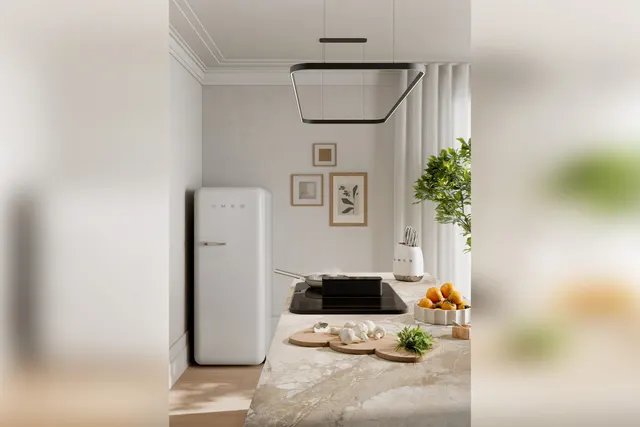
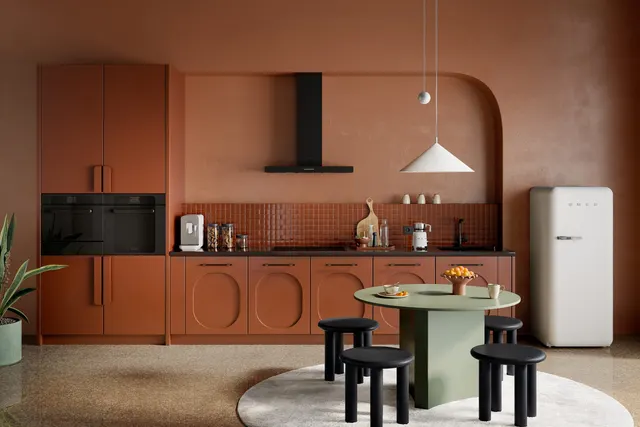
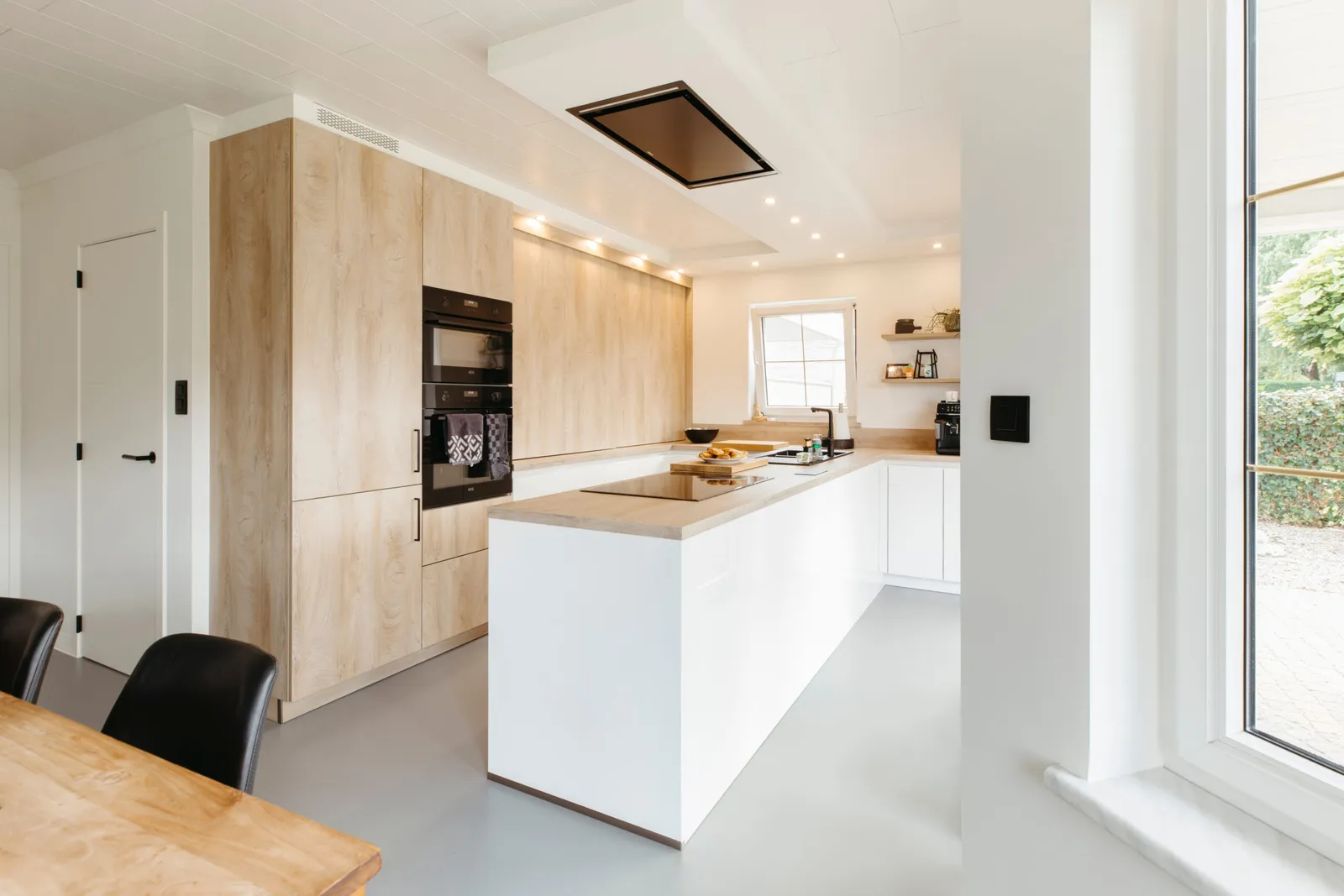
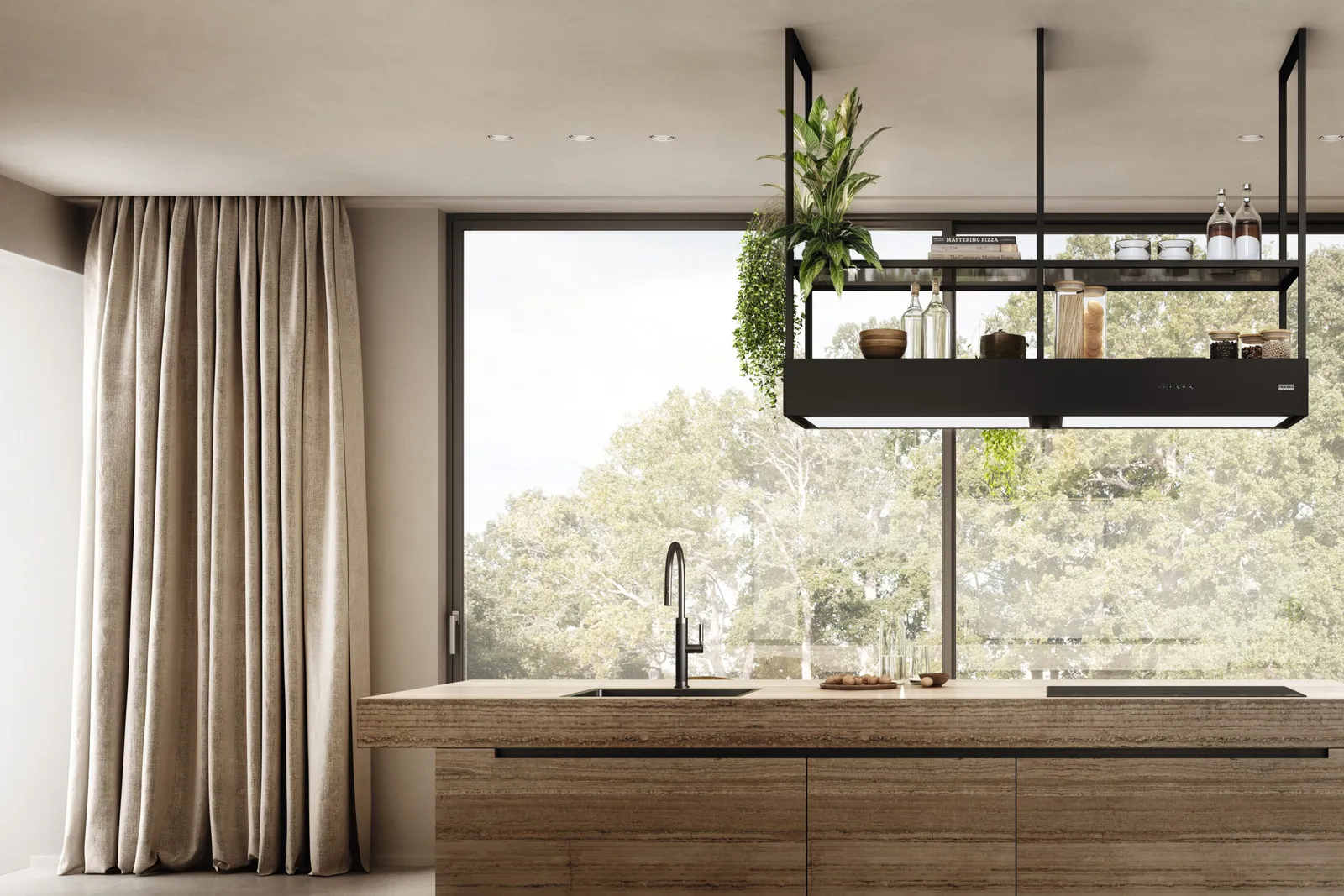
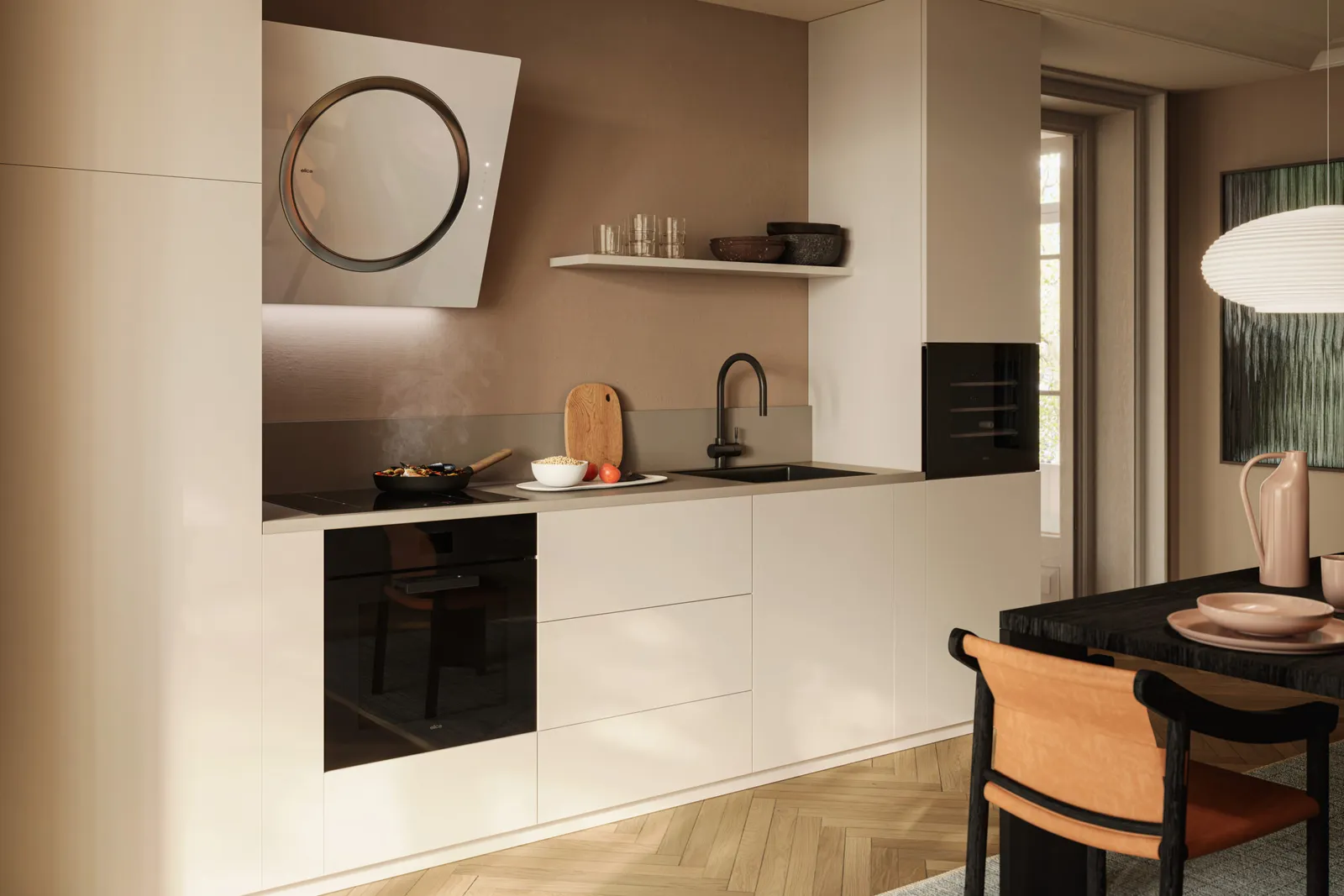
A cooker hood above the hob is the configuration we’ve been used to for decades. Wall-mounted, suspended above an island or fixed to the ceiling. With such an enormous range available, consumers are sure to face choice overload, and developments in this field show no sign of slowing down. One major advantage of a hood suspended above the hob over its ‘rival’, the extractor integrated into the worktop, is that hot air and cooking vapours naturally rise.
An extraction system above the hob therefore needs no help drawing air up to it. For manufacturers, these models are a playground for innovation, which can, and perhaps even must, be visible. The hood’s design is hugely important, particularly when the kitchen is part of the living space. It can be a centrepiece, a focal point and a talking point. On the technical side, quieter motors are essential, since people want to be able to talk in an open-plan kitchen. Other key features include sensors that detect steam and odours, and even a connection between the hood and hob to coordinate the two appliances perfectly.
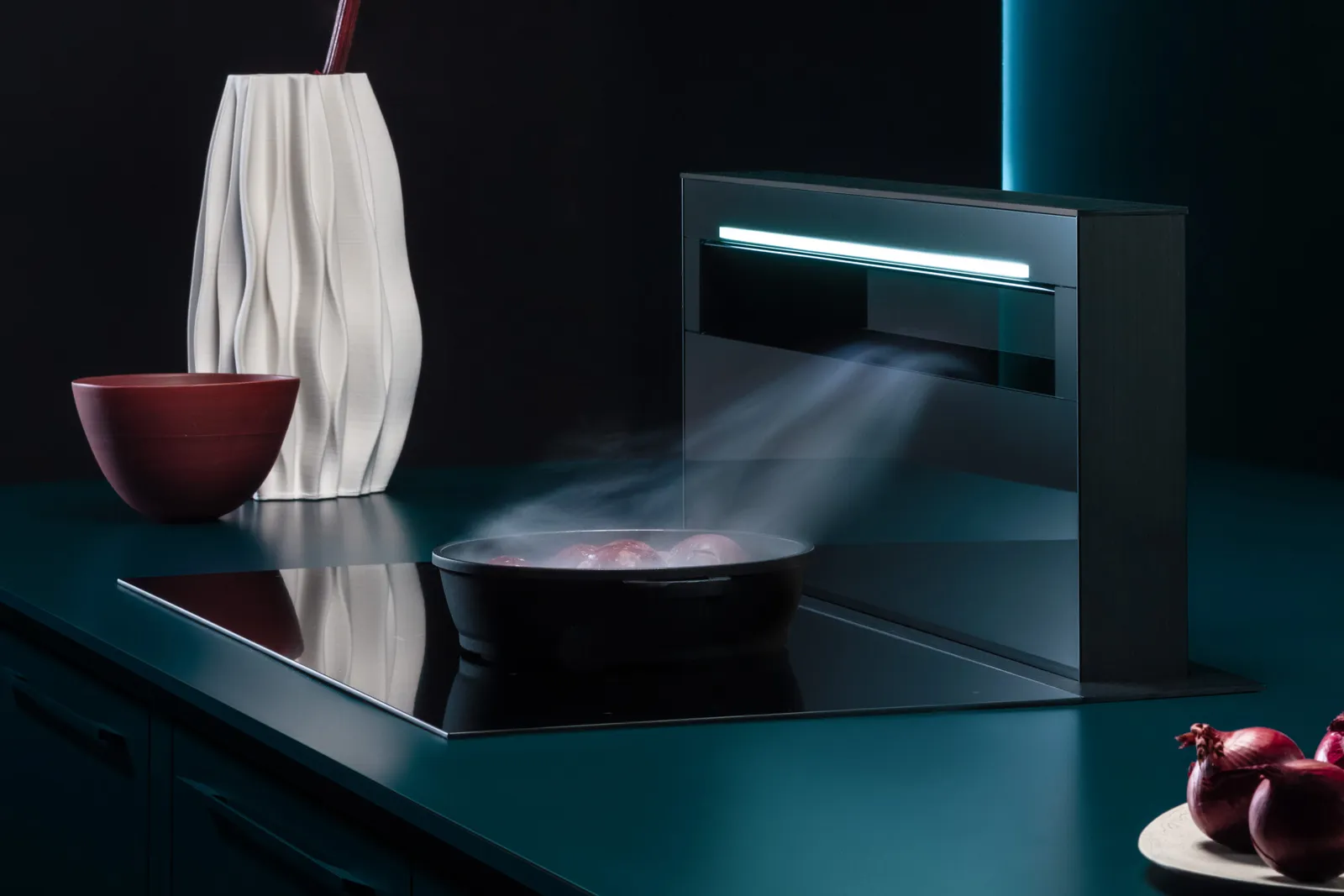
The new arrival: an almost invisible integrated hood
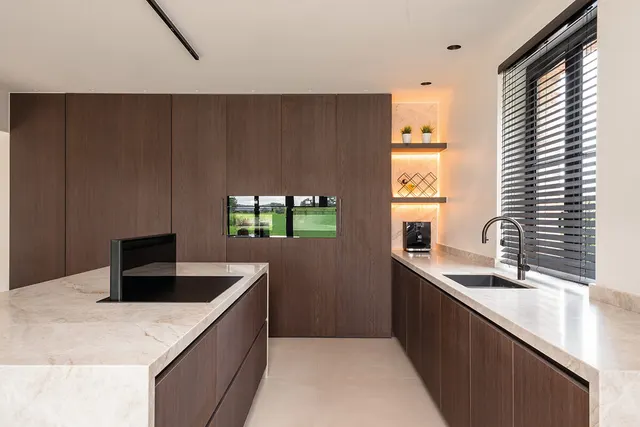
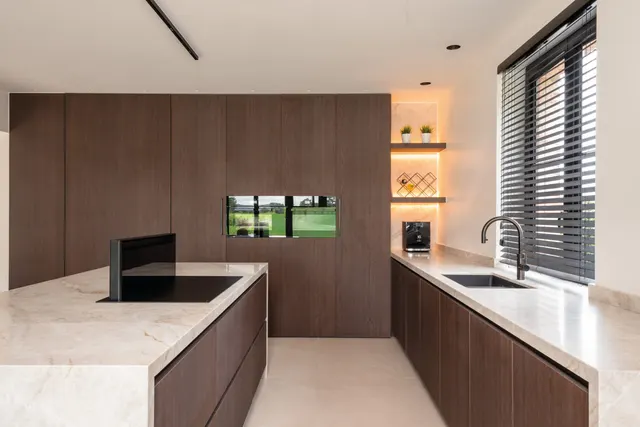
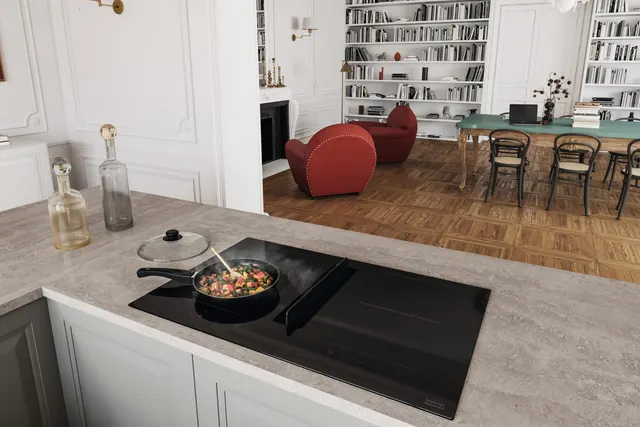
The arrival of hobs with integrated extractors didn’t come out of nowhere. Although integrated hoods have since become a popular and proven choice, they fit with the trend towards open-plan living kitchens, where calm and uncluttered spaces take priority. In this setting, a ceiling-mounted hood may be seen as intrusive, though some people want a centrepiece that draws every eye. Others can turn to manufacturers that have developed integrated systems. Cooking vapours are removed at source, before they have a chance to rise. The result is an unobstructed view between the kitchen and the rest of the living space, with nothing above the worktop to get in the way. Consumers who want a seamless visual effect often choose this option deliberately. As extraction works against the natural flow of air, powerful motors are needed. They must also be quiet enough not to drown out conversation. Fortunately, R&D teams have developed high-performance models that don’t overload the space with noise.
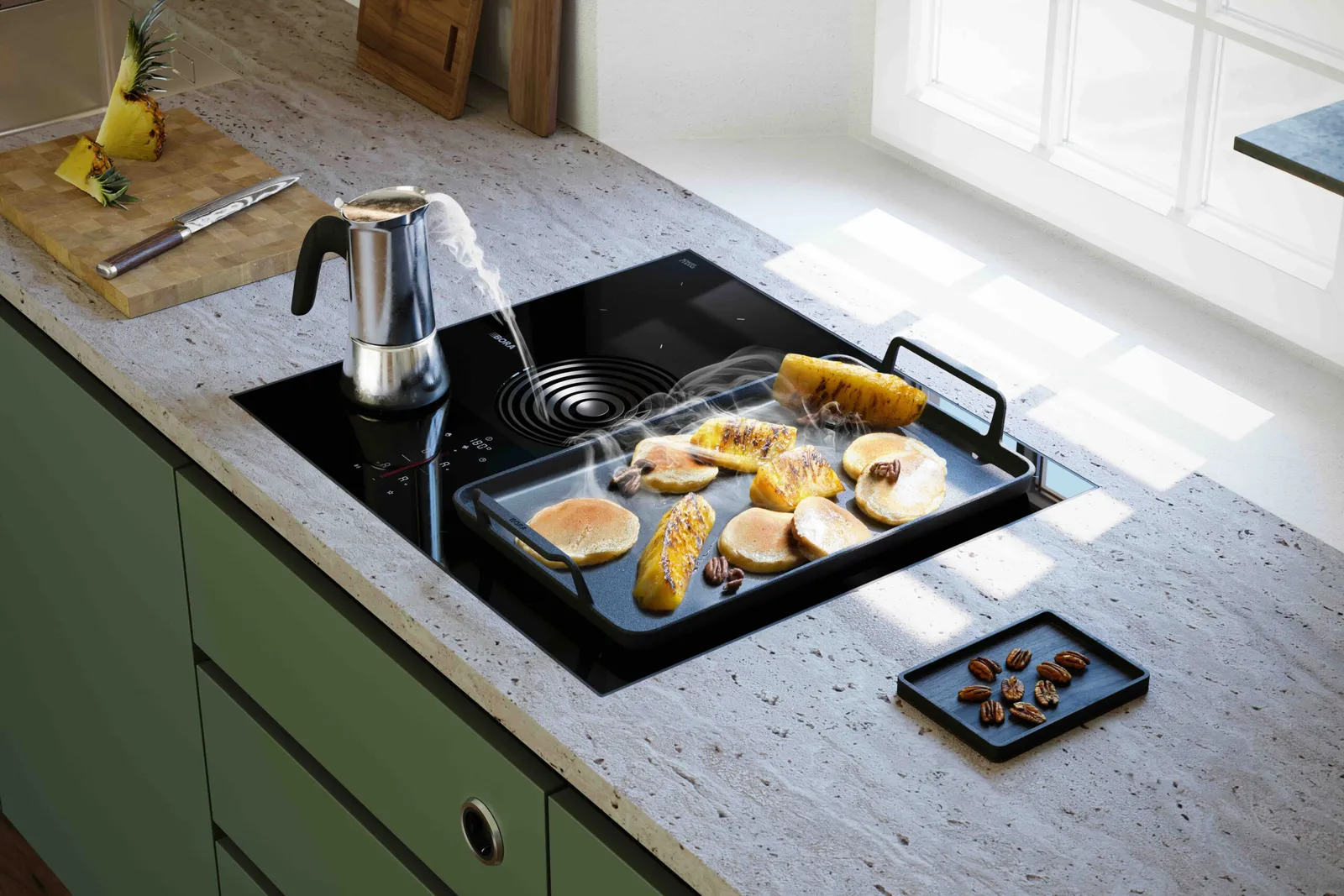
Two concepts, different considerations
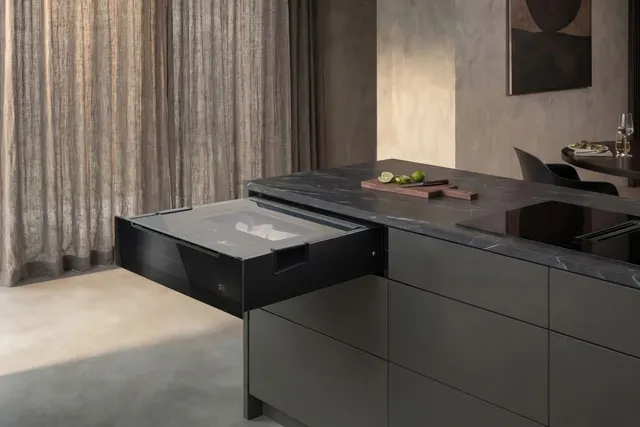
Everyone has to choose between these two systems, weighing up the pros and cons before settling on one or the other. Do you want to make a design statement with a prominent centrepiece, or would you rather have technology that stays out of sight? Which solution best suits your needs, given the available space, your cooking habits and your budget? In the previous paragraphs, we deliberately presented this as a binary choice: a system suspended above the hob or an integrated one. However, manufacturers in our sector are so innovative that they have come up with some interesting ‘in-between options’, such as extractors that retract into the worktop when not in use and rise up again when you cook. What about modular systems that sit on the worktop and combine an extraction module with storage modules for all kinds of utensils and accessories?
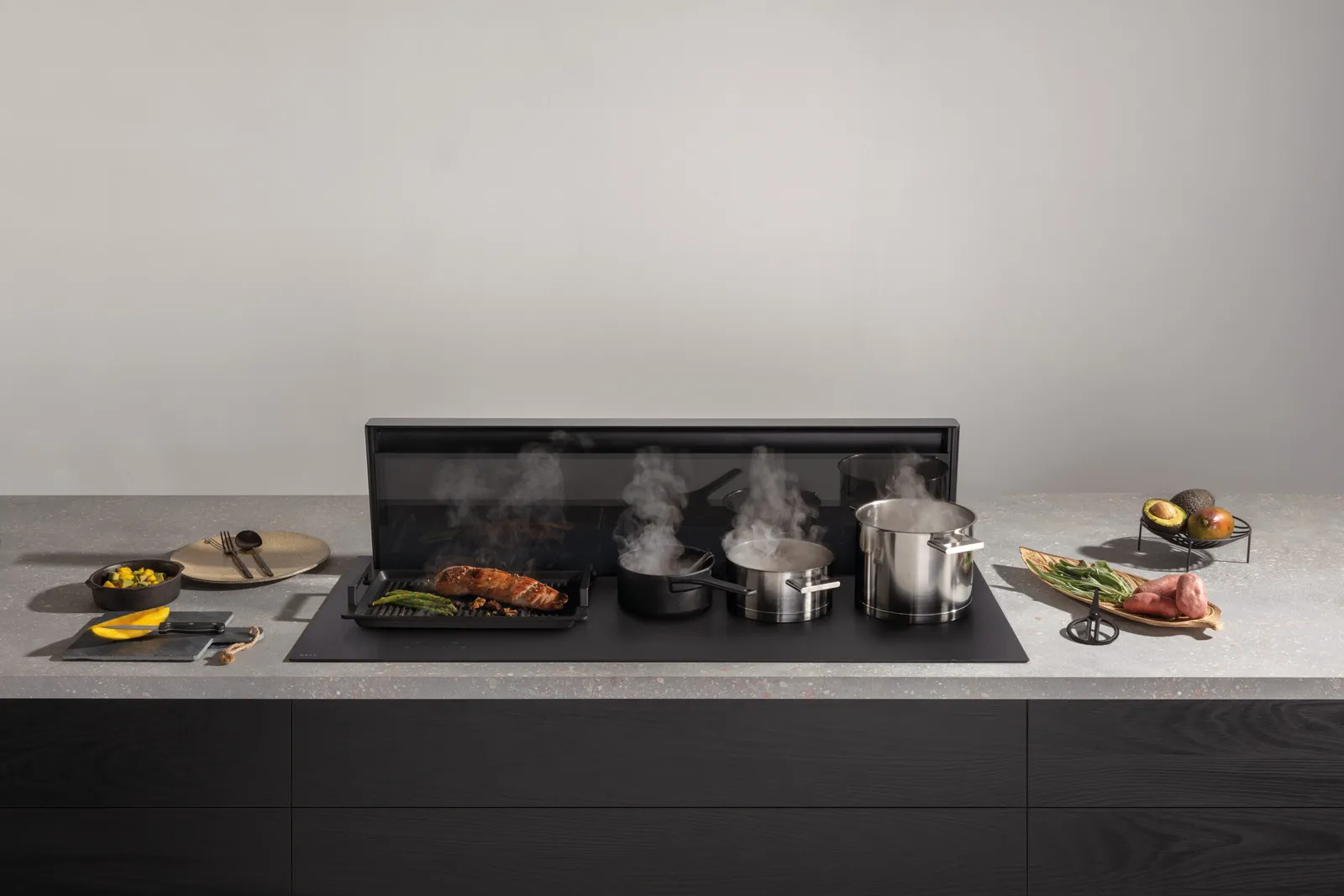
A lasting impetus for innovation
Above the hob or integrated? There is no clear winner. Both concepts are mature, well thought out and technically capable of meeting expectations. In our view, the difference comes down to the user’s priorities. The range of options is a real boon for the kitchen sector, from manufacturers to designers. It shows that there will always be room for innovation, and that the cooker hood is an integral part of every kitchen concept.
Question about this story? Ask your question
Keep following this
Get an email when a new story is published. No account needed.
- ThemeCooking and ventilation control
- SubjectElectrical appliances