






The sink: the beating heart of the kitchen
Texte Tom Rampelbergh Photos BLANCO, Naber, Caressi, Franke, Kvik, DSM Keukens
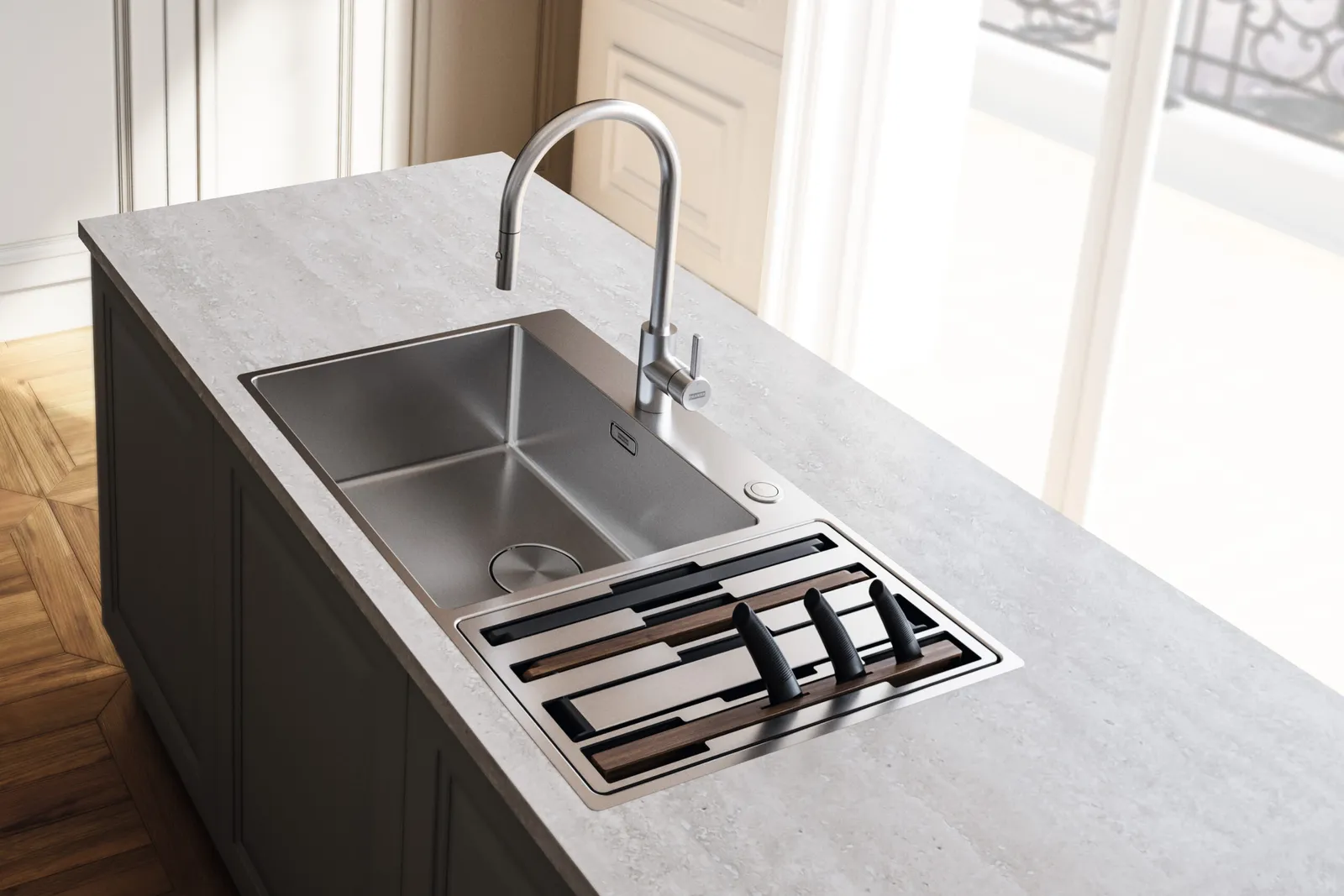
You’ll certainly recognise this classic storyline from feel-good films: the mistreated ugly duckling gradually transforms into a majestic swan. In this case, the starring role goes to the sink. From a simple ‘washing-up bowl’, it has become a multifunctional workstation that is no slouch when it comes to technology and design.
The sink used to be seen as a necessary evil. Every kitchen needed one, but it was preferably tucked away in a small corner. That was because the sink was used exclusively for dirty dishes. Things have changed considerably since then! The sink is now a fully fledged water station, an essential multifunctional workstation where all kinds of activities take place, not just washing up. Which, incidentally, is no longer even done in the sink since the advent of the dishwasher. Whatever the case, the sink is more important than ever in the kitchen.
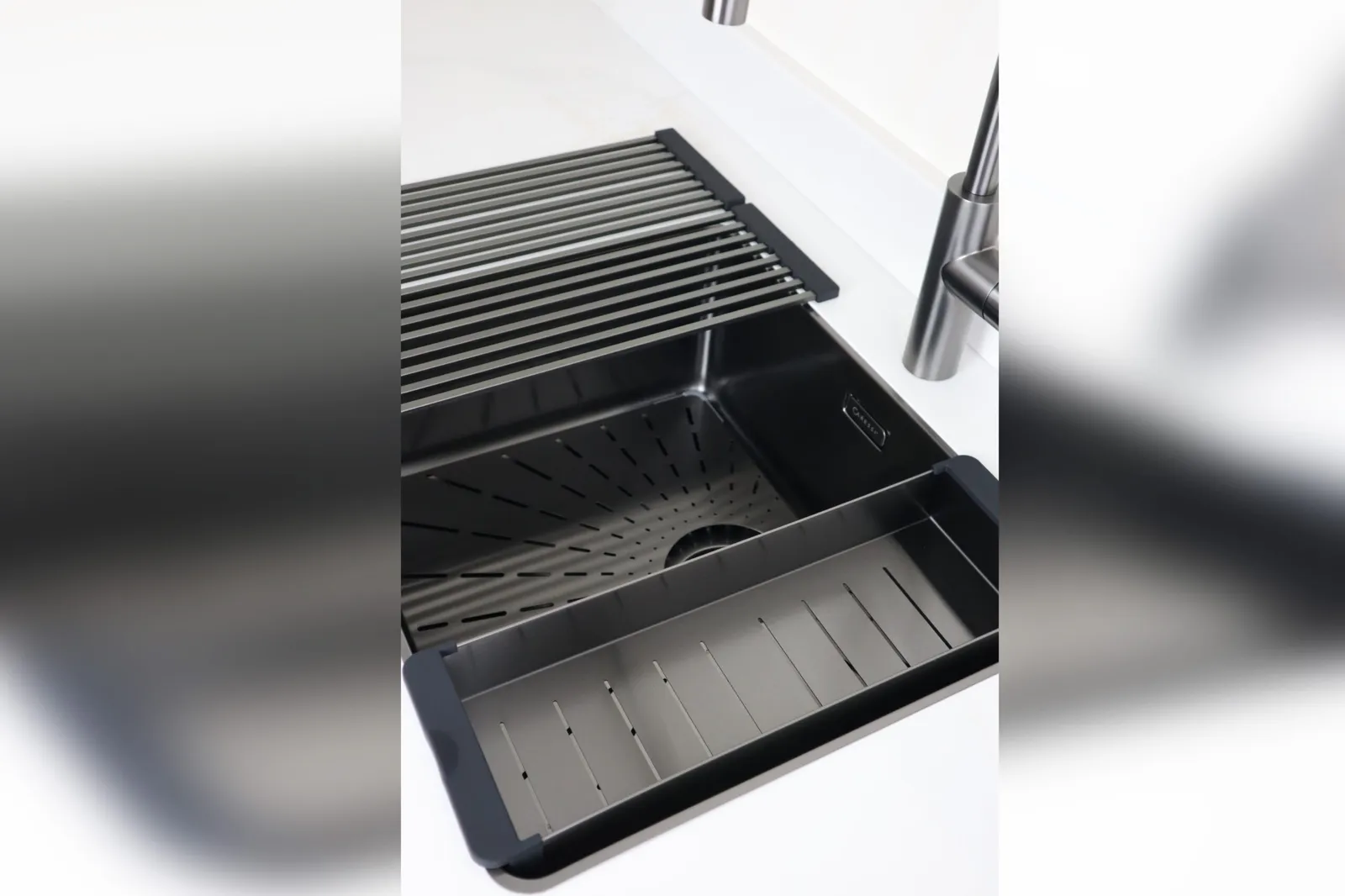
Food preparation
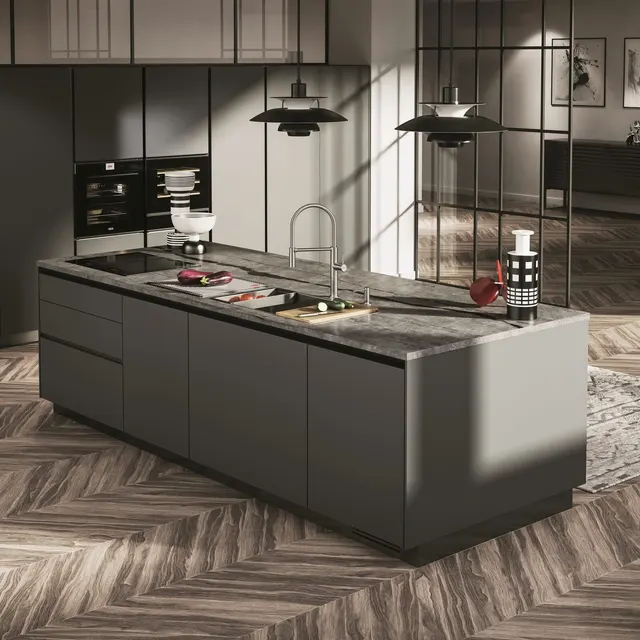
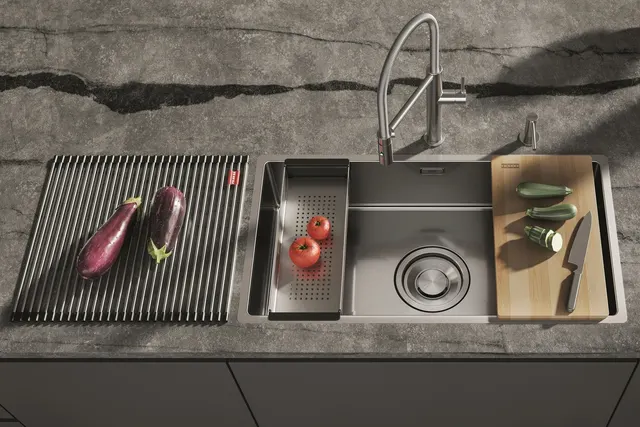
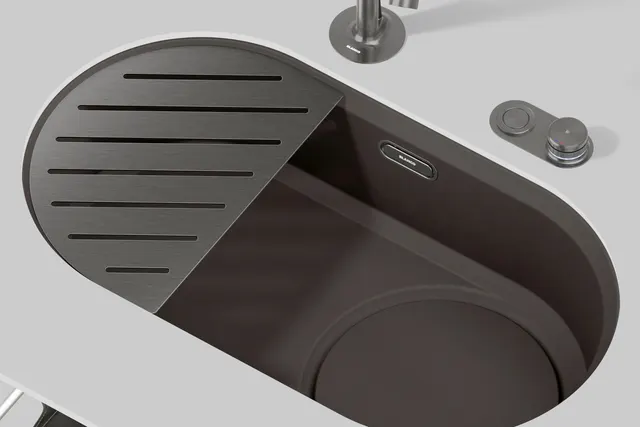
We do less washing up, but more cooking. This perfectly sums up how the sink has evolved. Today, it forms a complete system. In fact, the term ‘sink’ has become too limiting. Integrated chopping boards, colanders and bowls that fit neatly over its edges turn the sink into an extension of the worktop. Given that space is always at a premium in the kitchen, this is clearly good news. Every square centimetre can be put to maximum use. Add the proximity of the water supply and waste-sorting bins, and the water station is an obvious choice for food preparation.
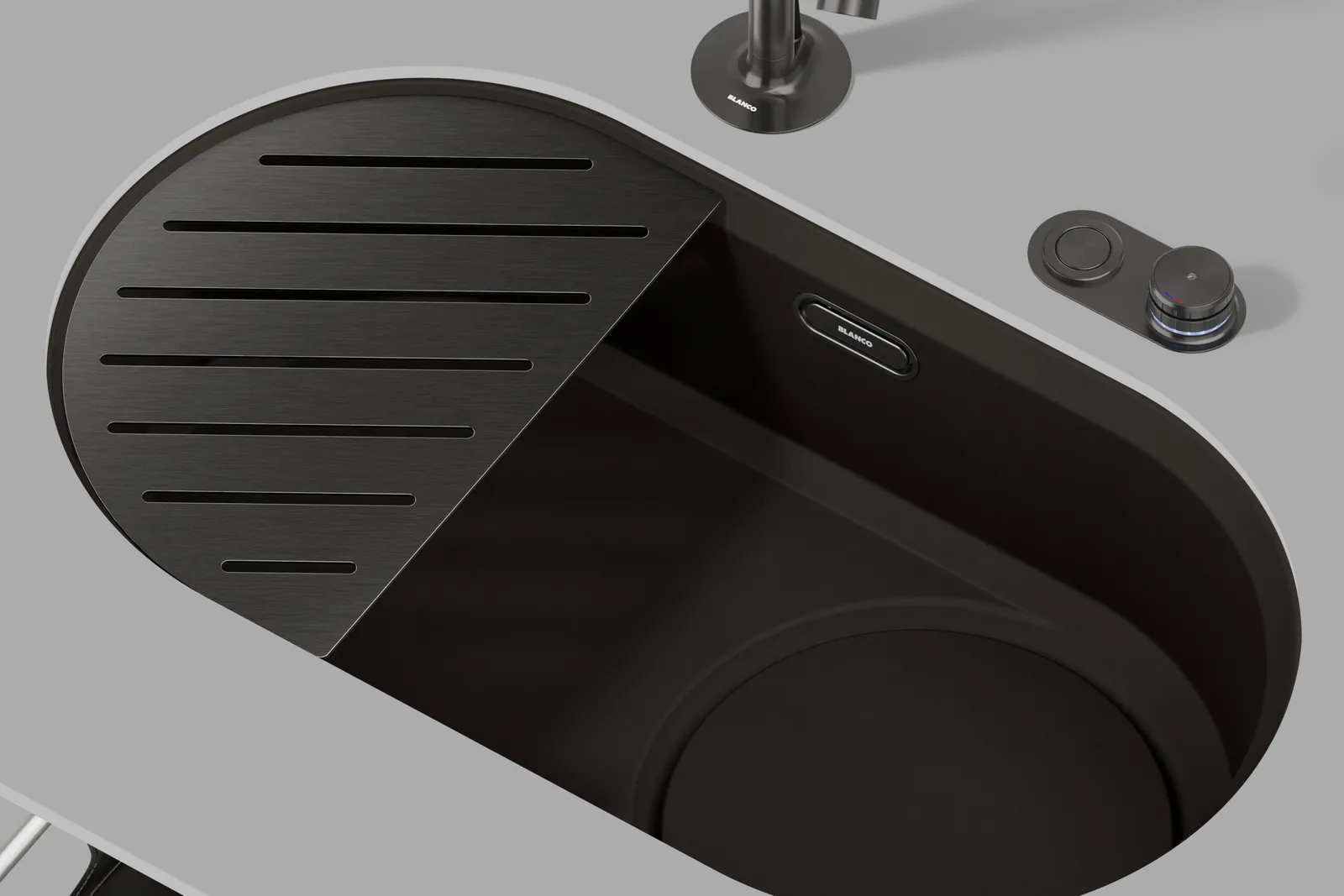
Materials and finishes
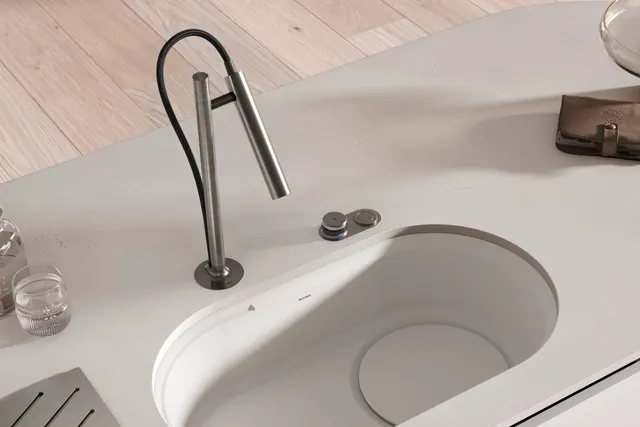
Although the sink’s ‘role’ has certainly evolved, its place in the kitchen is not in question. Some manufacturers have even made a point of enhancing its appeal, elevating it to the status of a timeless classic. Stainless steel remains the most widely used material, although other materials are making strong headway and have even overtaken stainless steel in popularity. Every material naturally has its strengths and weaknesses. Scratch resistance, hygiene and finishes are all factors in the customer’s decision-making process.
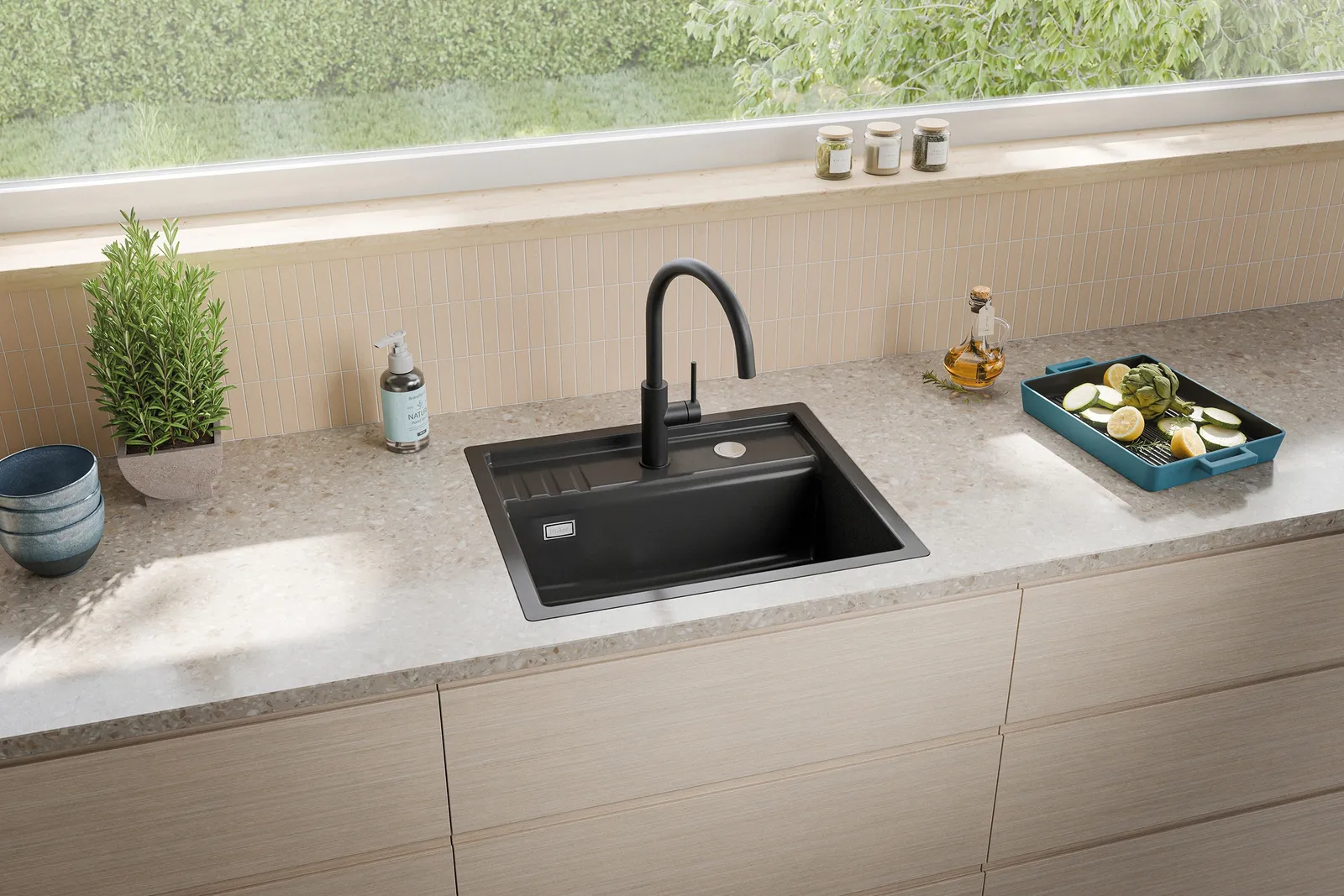
Part of a bigger picture
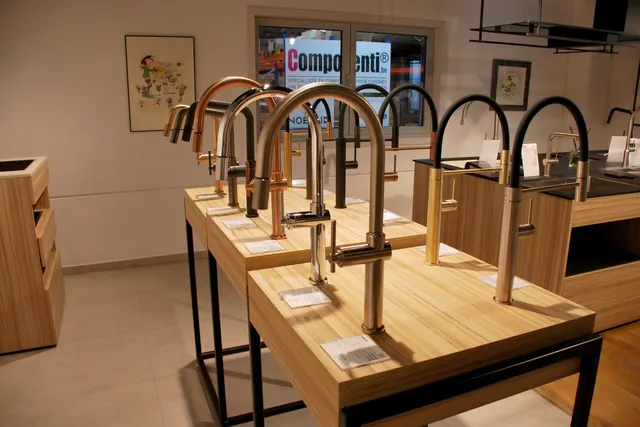
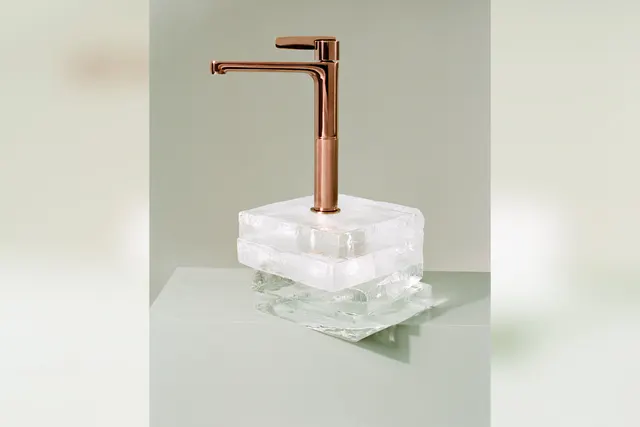
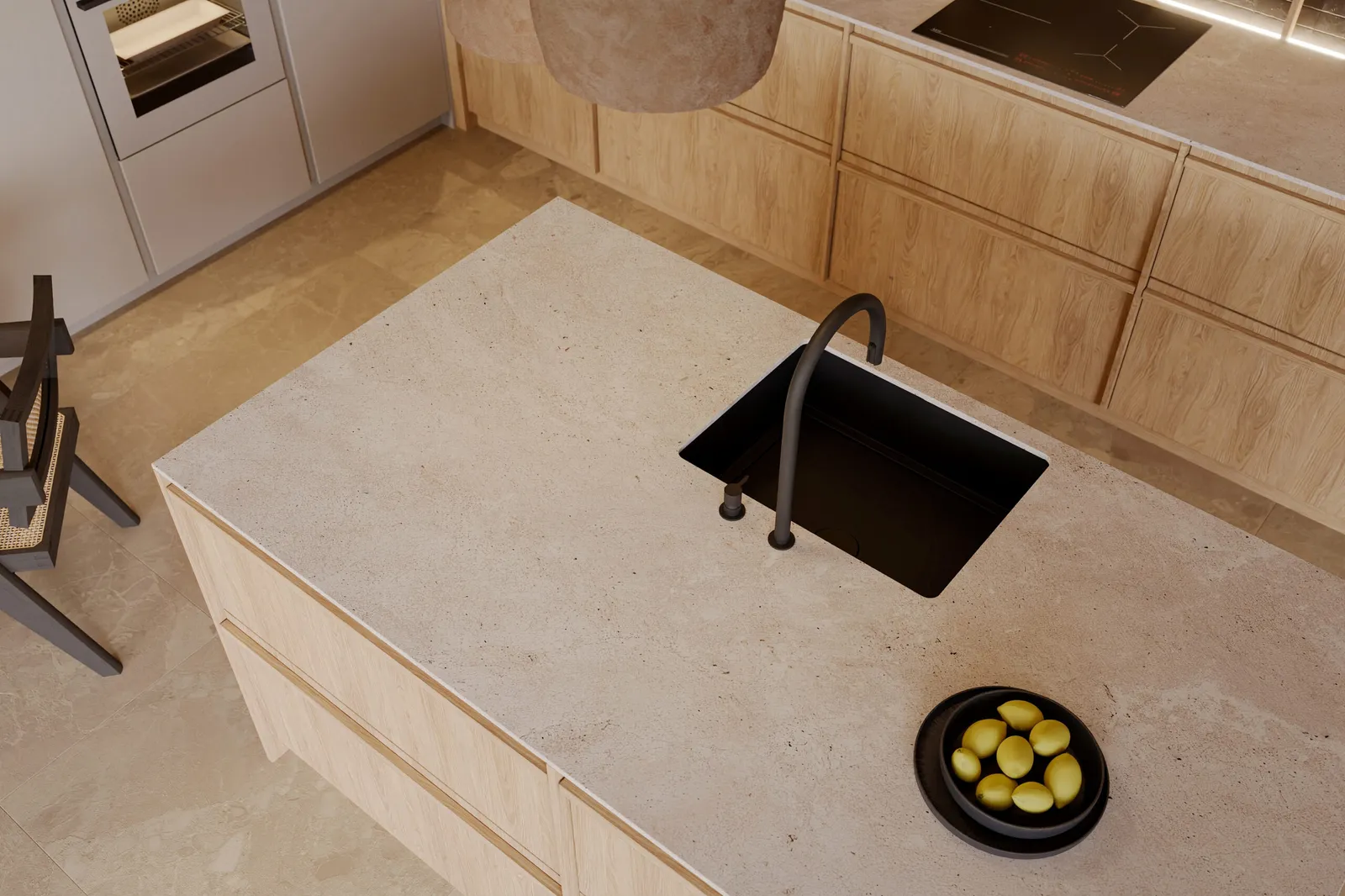
These days, you’ll rarely see a sink on its own: it is inseparable from the tap and the cabinet beneath it. The latter can house a waste-sorting system. Innovation clearly extends beyond the edge of the sink. Multifunction taps are very popular, with or without a filter system installed in the cabinet. Fortunately, waste-sorting bins now come with practical options for integrating such a system. The water station has clearly become the nerve centre of the kitchen.
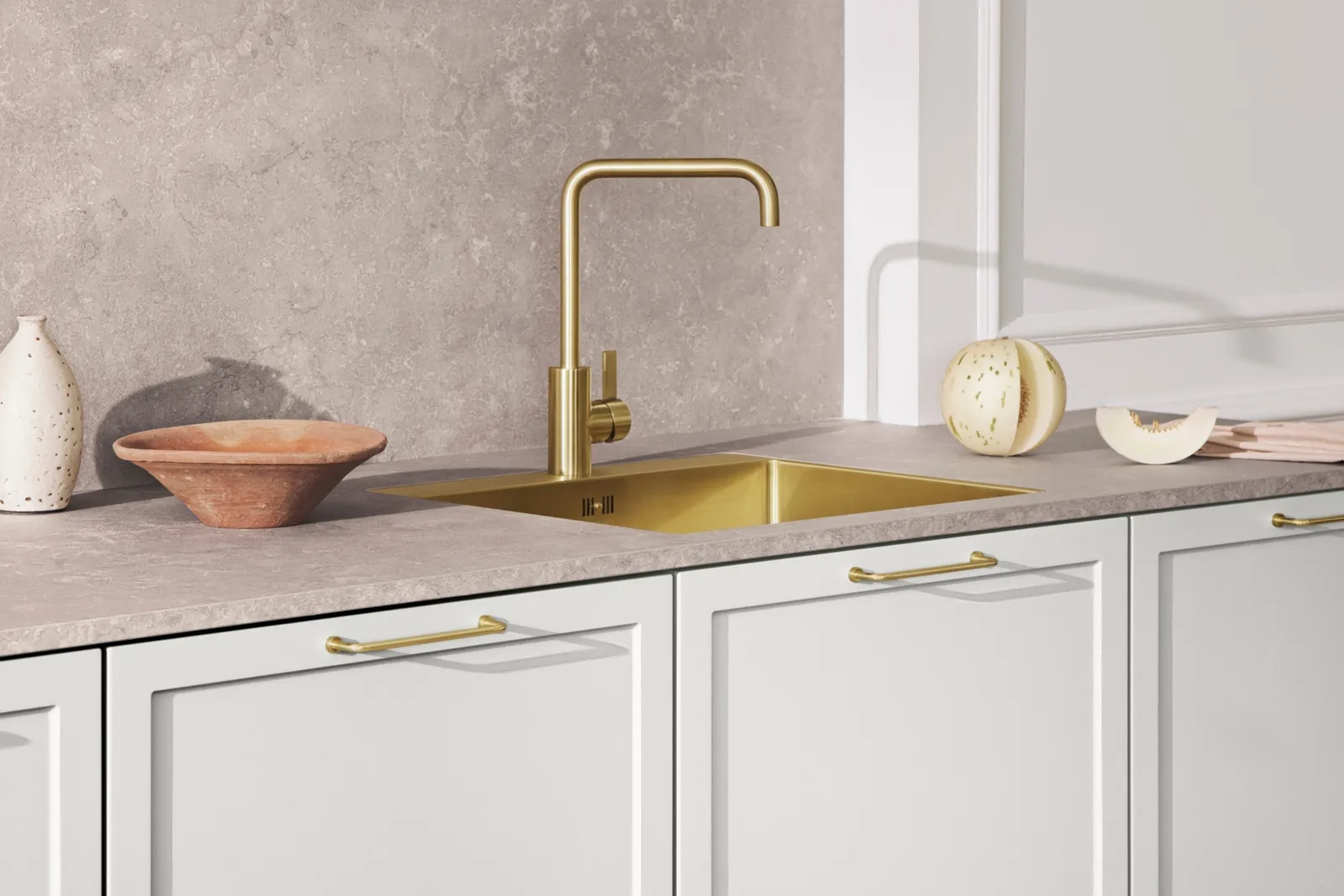
From ugly duckling to majestic swan
To continue the metaphor, we can say that the sink has come of age. After passing through a few intermediate stages, the ‘ugly’ sink, tucked away in a small corner and used only for washing up, has become a versatile workstation where the magic of food preparation begins. For kitchen professionals, the real challenge is to show customers that the water station is for much more than the dreary final chore after a meal. It is where the culinary experience begins. Only then can they discuss the brands, materials and other decisions that have to be made.
Question about this story? Ask your question
Keep following this
Get an email when a new story is published. No account needed.
- ThemeThe multifunctional sink area
- SubjectSinks and taps