






Which worktop is right?
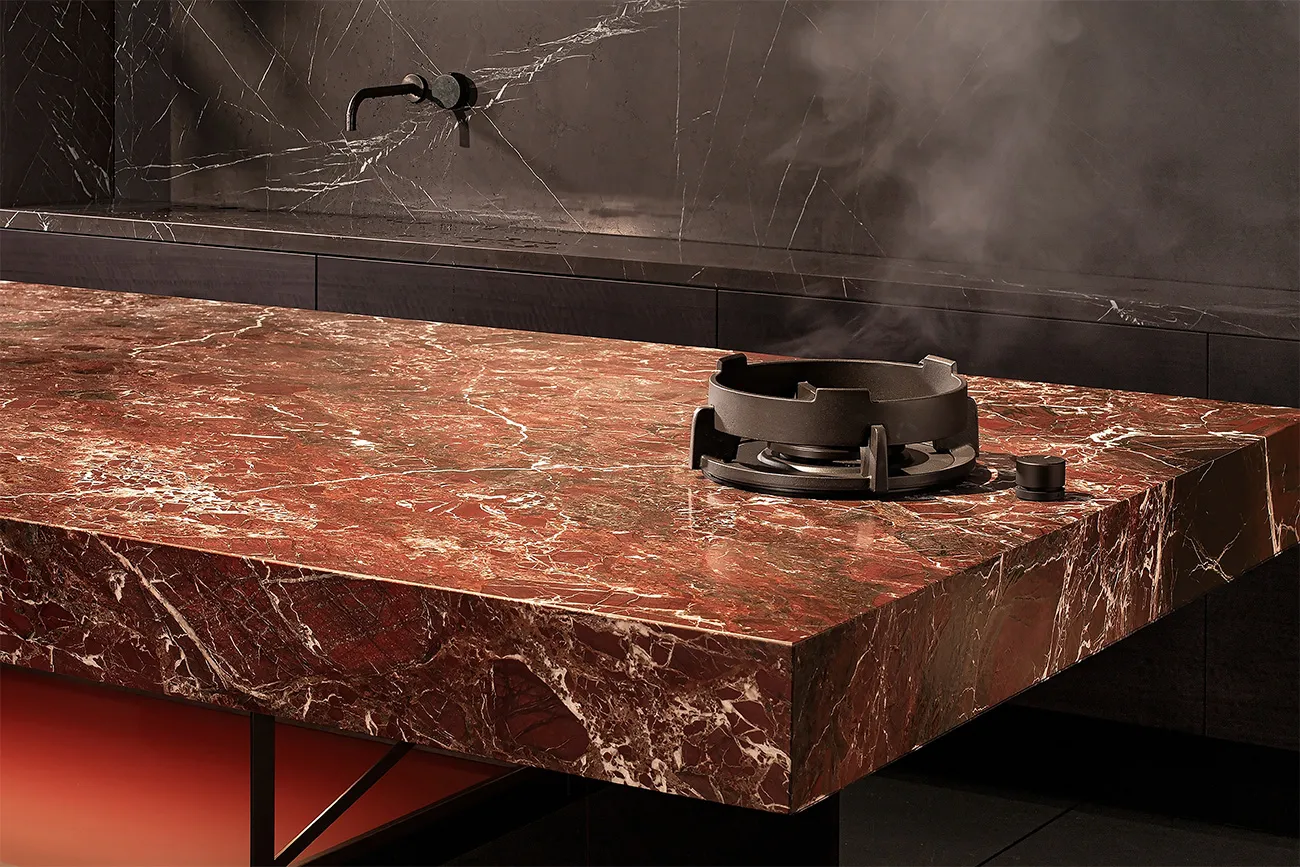
It has long been no secret that the worktop is an important element in the kitchen. And it goes without saying that worktops come in a wide range of materials, thicknesses and colours. Another fact is that consumers looking for a new kitchen are not familiar with these things. It is therefore essential to explain clearly the advantages and disadvantages of each material, as well as its specific properties. They need a complete picture of what is available.
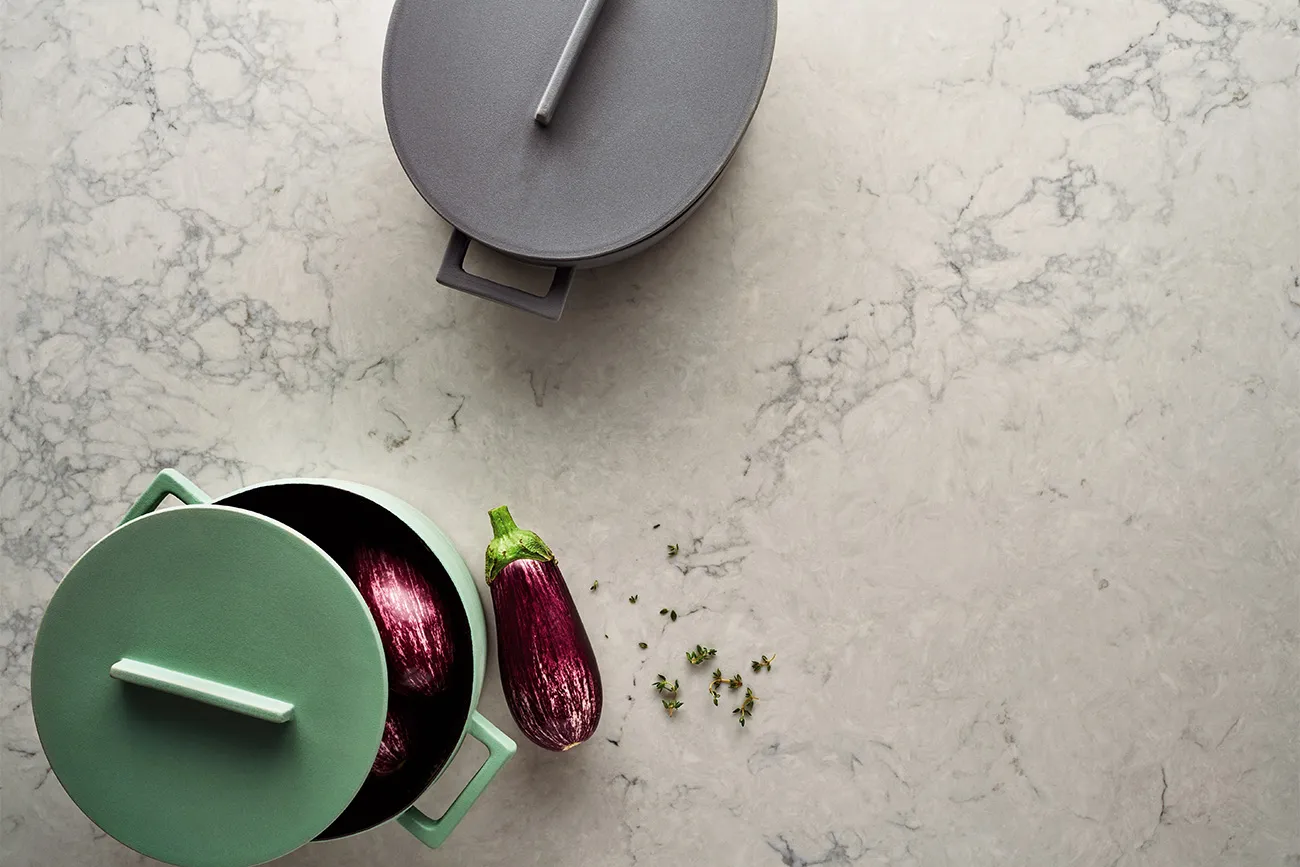
Which worktop will be the best choice for their kitchen? This is far from a straightforward question: just try coming up with an answer that suits everyone! And yet this is part of your role as a kitchen specialist. The worktop is one of the most important elements in the kitchen. It is the ‘appliance’ with the largest surface area and, as a result, the one that sees the most action. Take the time to sit down with your client and discuss what they expect from their worktop, rather than giving in to the temptation to suggest a particular material too quickly. When you ask what they want from their worktop, they will probably mention qualities such as ease of maintenance, hygiene and durability. But the list can, of course, be a long one. Every consultation should therefore cover topics such as material, shape and height, to name just a few.
Rounded edges
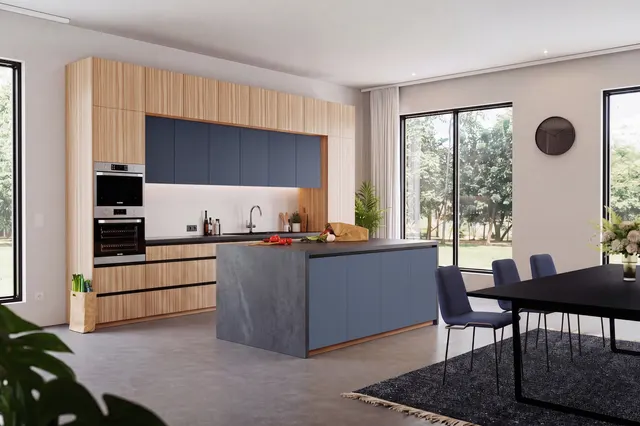
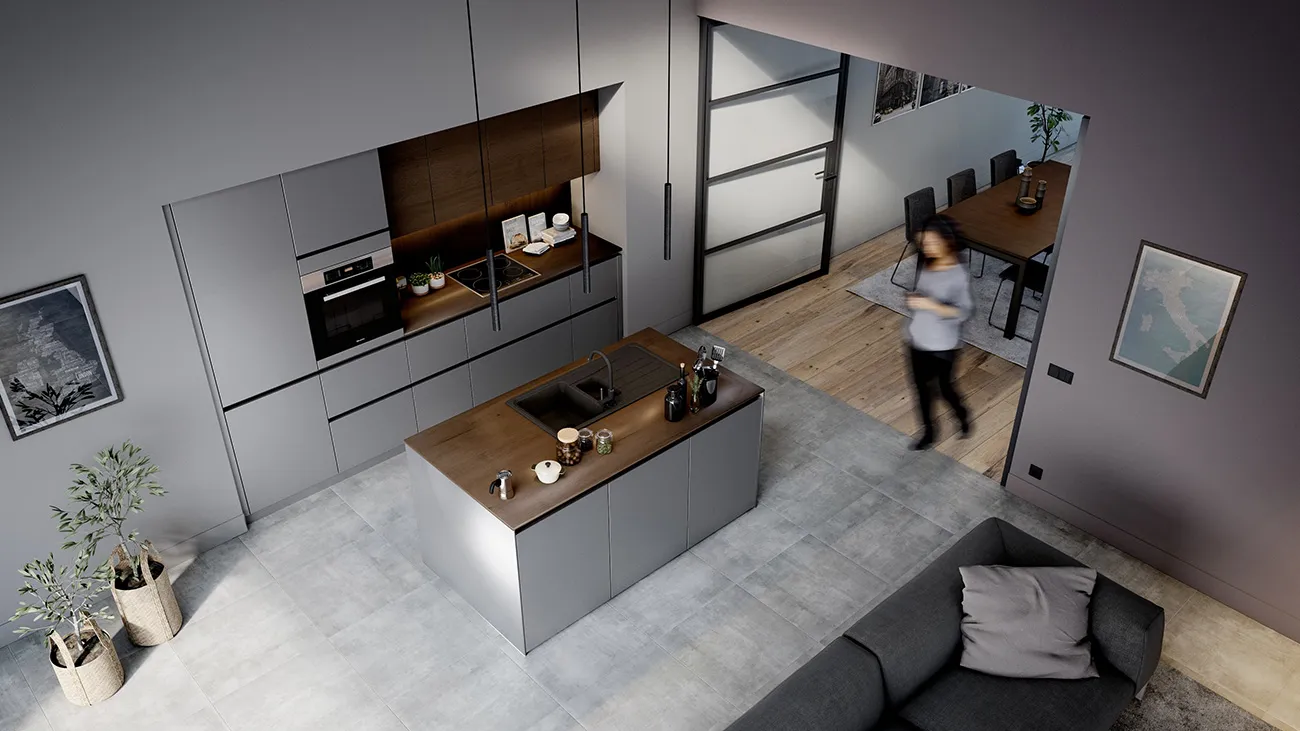
A worktop is always made to measure. That is an unchanging fact. Every home is different, every kitchen is different, and the people who live in them are different from their neighbours. Each kitchen is therefore unique, and the worktop deserves special attention, just like the sink, tap and all the appliances. Today, however, we are seeing a cautious rise in rounded kitchen islands. After round sofas, round rugs and round tables, this trend is now making its way into the kitchen too. Angular surfaces have become boring, and we want more life in the kitchen. One practical detail worth noting: rounded corners offer a little extra safety when you have young children moving around the house and, consequently, the kitchen.
Higher or lower
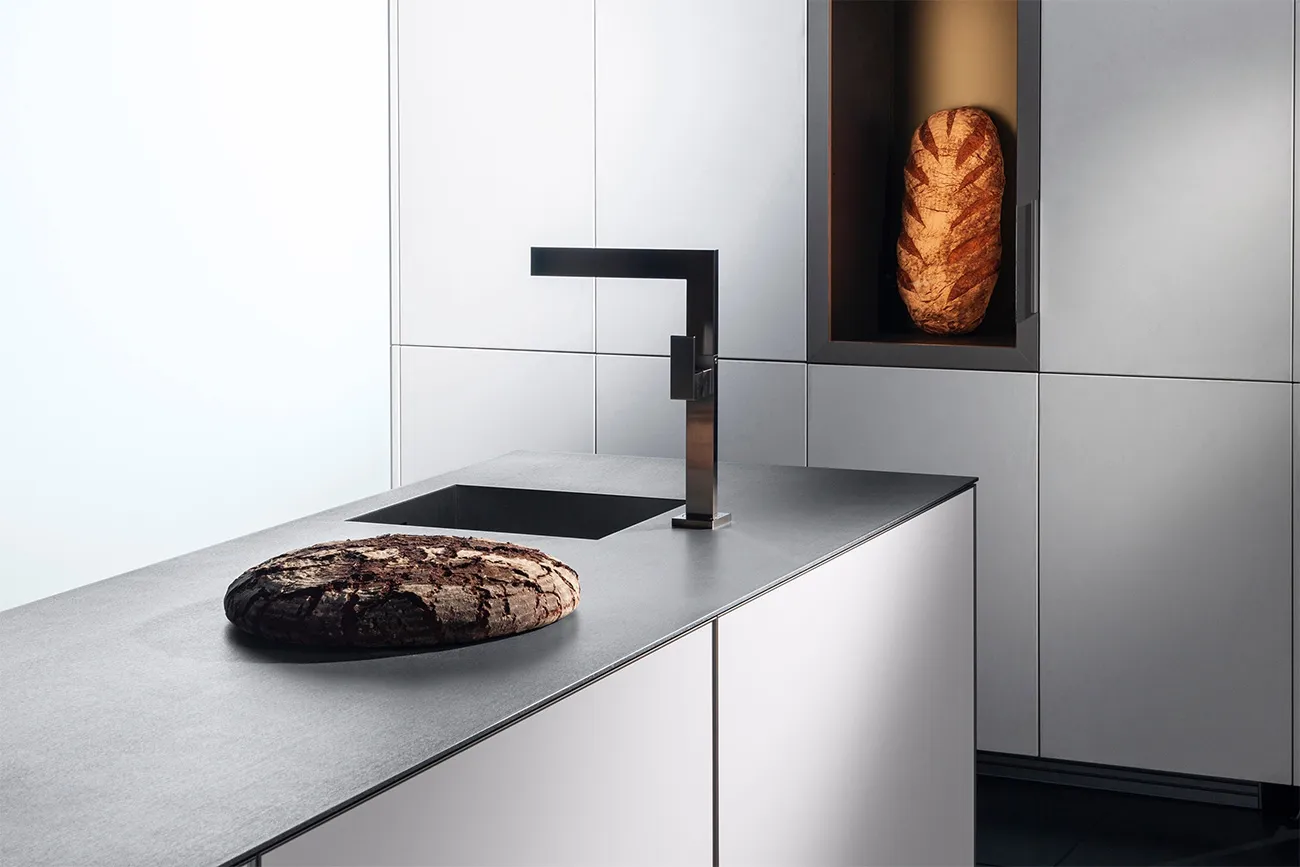
The height of the worktop is vital for ergonomics. You may look at a worktop and think that it would be perfect if only it were a little higher. There is, of course, a standard height, but this can be adjusted to suit your requirements.
Ideally, you should carry out a test and try a few tasks at the worktop, such as typical food preparation activities like chopping vegetables and stirring a saucepan or frying pan. This is the only way to find the ideal height for your client.
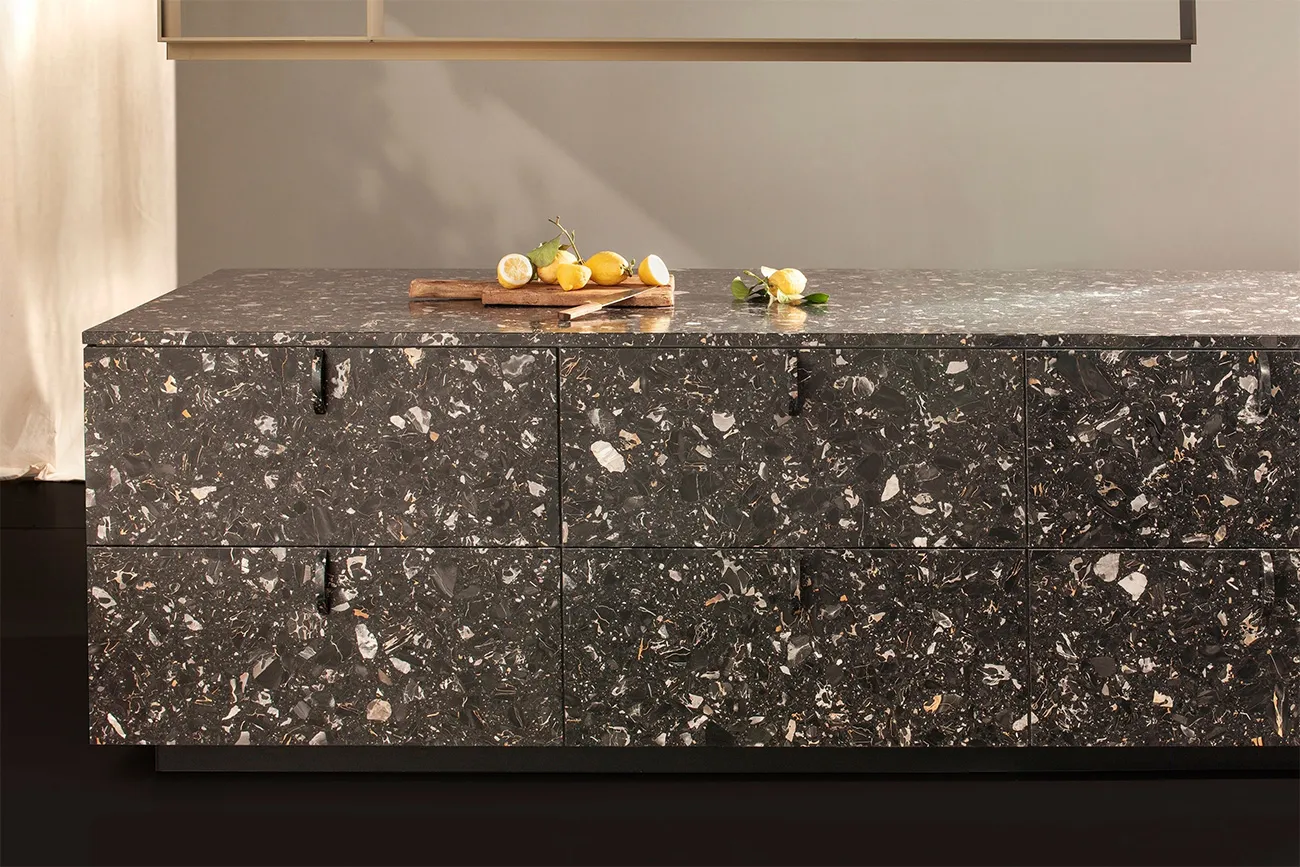
A wide choice of materials
All clients expect to have to choose the material and colour of their worktop. After all, everyone who visits their home will see it, especially as the kitchen and living room have now become one space and the kitchen has become the hub of the home. With the Covid pandemic, we may be more inclined than before to ‘hide’ appliances, which a worktop cannot necessarily do. The choice of worktop has a bearing on the kitchen’s atmosphere and style. It is therefore important to consider its functional properties, but not just those. When it comes to materials, we all know that the most common, or most frequently mentioned, are natural stone (granite, bluestone, marble, etc.), composite, ceramic, Dekton and stainless steel. But worktops can also be made of glass, wood or concrete! Concrete is available in several types and sizes, and is by no means limited to the kitchen. A concrete worktop can also be installed in the garage, bathroom or games room. Its advantages include a robust surface that is resistant to scratches, heat, pressure and dirt. Concrete is hard, smooth and resistant to wear, heat and heavy loads. Polished concrete is also less prone to staining and easier to clean.
Question about this story? Ask your question
Keep following this
Get an email when a new story is published. No account needed.
- ThemeKitchen materials and surfaces
- SubjectWorktops