






A new centrepiece in the making
Texte : Tom Rampelbergh Photos : Franke, Reginox, Blanco, Deba Keukens
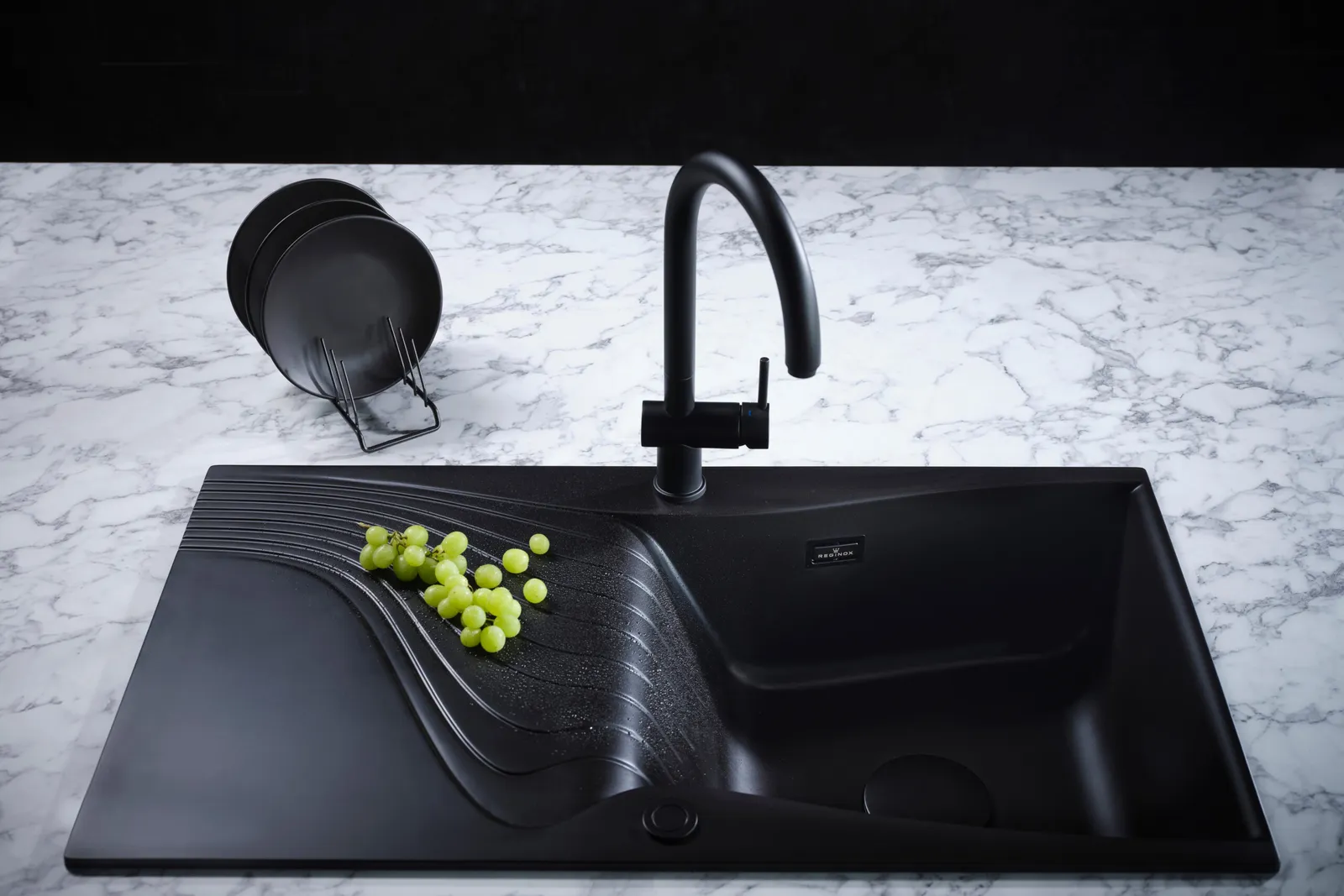
The sink is undoubtedly one of the most frequently used fixtures in the kitchen. Although, with a few exceptions, it has long since ceased to be used for washing up, it still plays an important role in everyday kitchen life. So much so that sink manufacturers are constantly looking for innovations that will give them an edge over their competitors.
The innovation train keeps rolling, and the good news is that no kitchen fixture is being left behind. Sinks, too, are subject to a constant drive for innovation. We have also noticed that society’s growing focus on sustainability, wellbeing and the environment has extended to sinks. Sustainability is no longer just a buzzword, but a valid selling point that can make all the difference when choosing a product from one manufacturer over another. Just like price, functionality or hygiene. Sustainability is, however, a fairly broad concept covering many areas: materials, production, finishing and even transport to the final destination. Every stage affects sustainability and therefore needs to be reviewed.
Installation trends
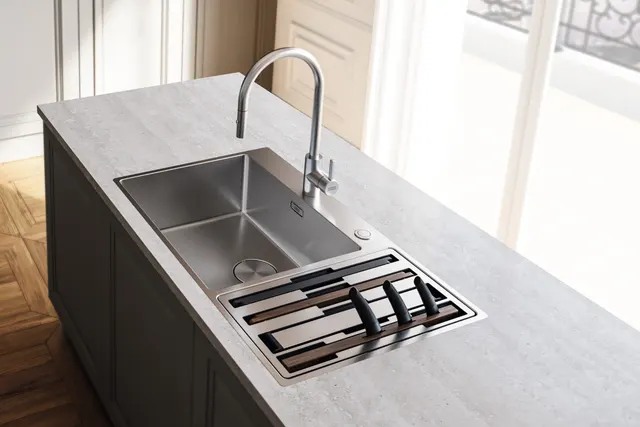
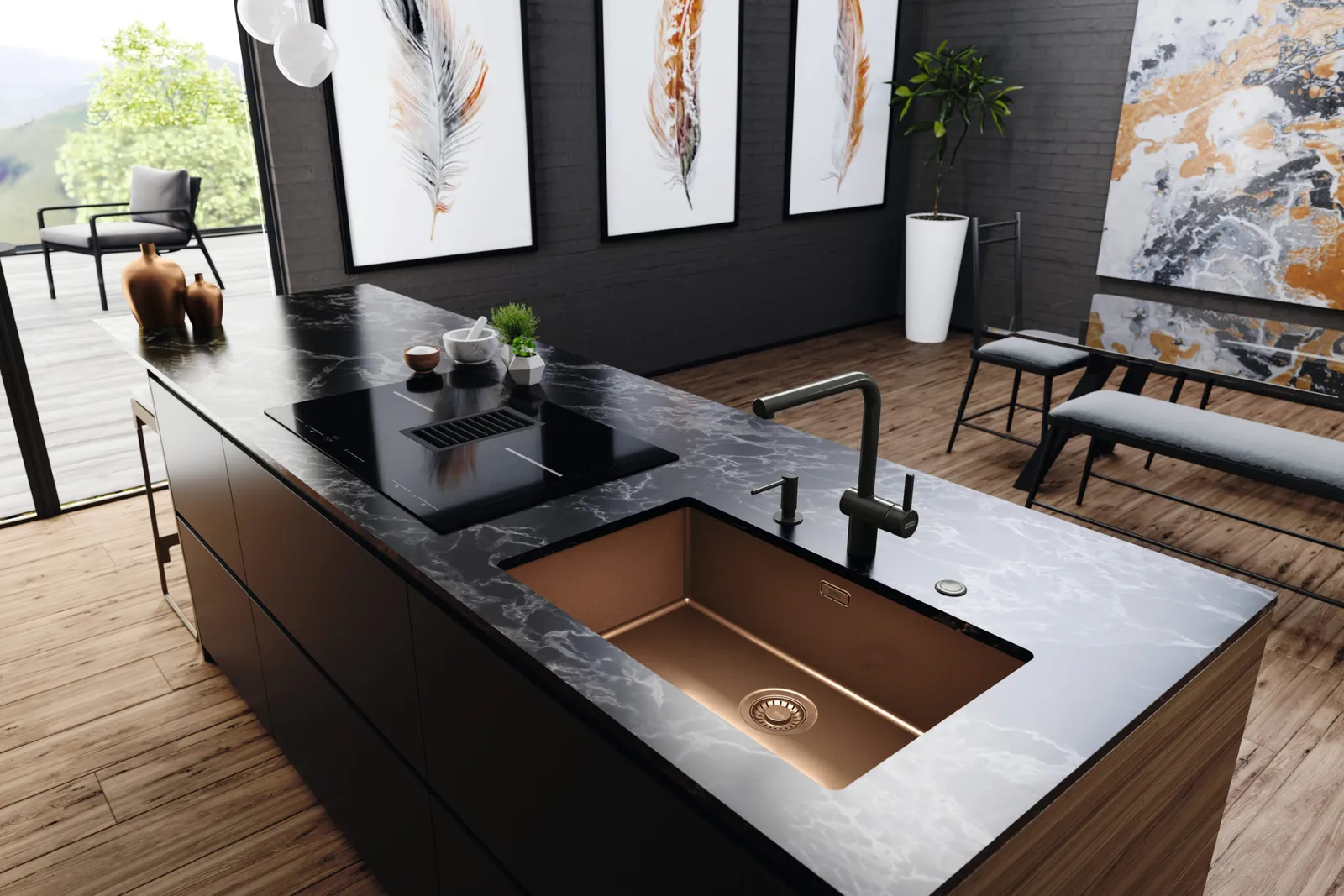
Many articles have already covered the different ways of integrating a sink into a worktop. There is no need, then, for us as specialists to explain them in detail, especially as today’s consumers clearly favour clean, minimalist designs when choosing a kitchen. This trend also explains the growing appeal and popularity of undermount sinks. With no visible rim, the sink is discreetly fitted into the worktop cut-out from below. Dirt and/or bacteria have no chance to build up around it. Another advantage is that undermount sinks are also easier to clean. It is the ideal way to integrate a sink into a worktop, appealing both to trend-conscious consumers who like to stay up to date and to health-conscious customers.
A coherent ensemble
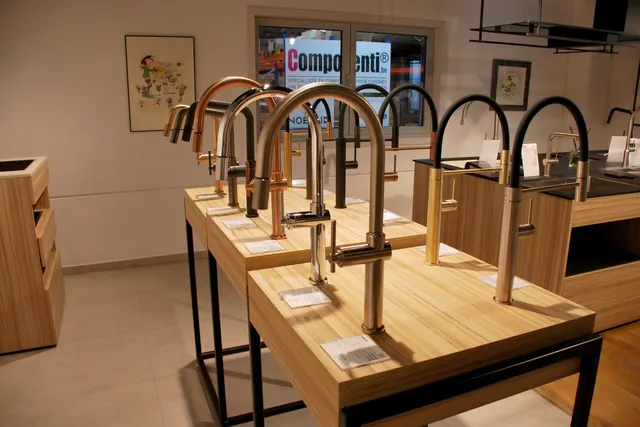
There is no need to explain the different kitchen styles available either. Clearly, everyone has their own taste, and that is all for the best. But catering for every taste also means offering a wide range of materials and colours, for built-in ovens and hobs, fronts and, of course, sinks. That said, no one wants a result that looks like a toddler’s garish colouring, made with a marker for the first time. Everyone wants a coherent look that creates the desired atmosphere and style. Sinks obviously play a role in this, too. Fortunately, sink manufacturers are aware of their responsibility and offer a broad palette of colours and shades. Every consumer is sure to find a shade that matches their specific preferences.
A transformation worthy of respect
Imagine having to write a job advert with a job description to find your new sink. You could draw up an extremely long list of requirements. Sinks are used far more often today than they were some twenty years ago.
Back then, they were used to wash fruit and vegetables and to do the washing up. That was it. Washing dishes by hand in the sink is no longer very common. We told you the sink had reinvented itself. Or, to use today’s marketing parlance, the sink has successfully rebranded. Despite a partial change in its primary purpose, the sink remains an essential part of the kitchen, with an expanded remit.
More than just a sink
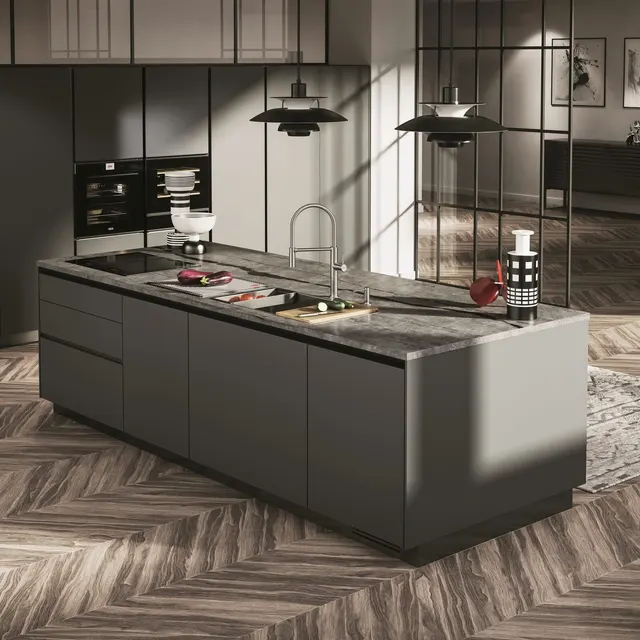
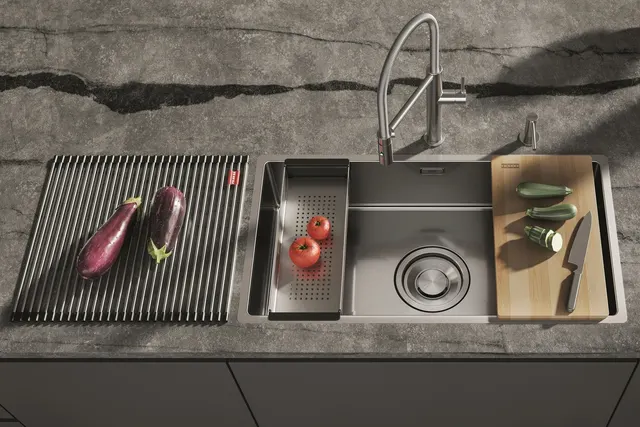
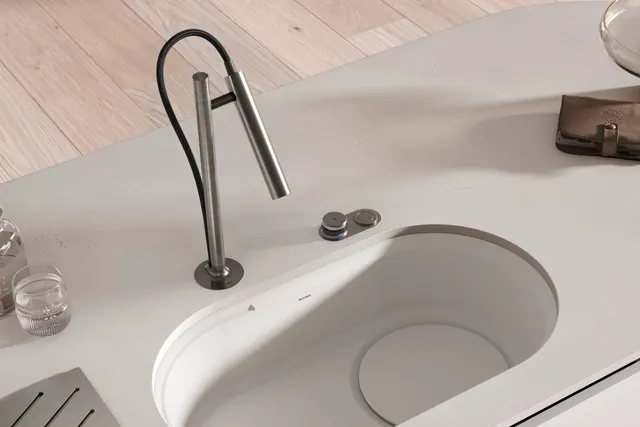
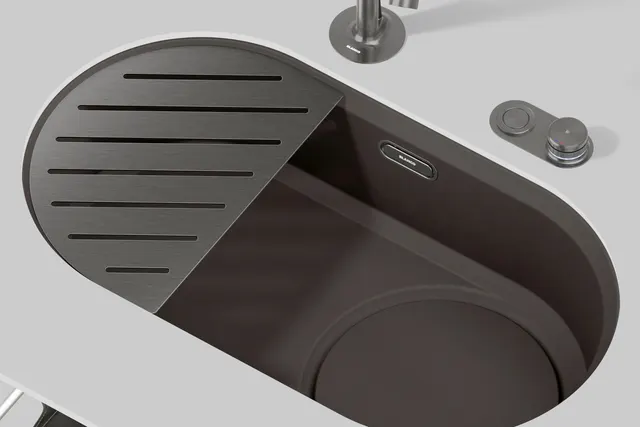
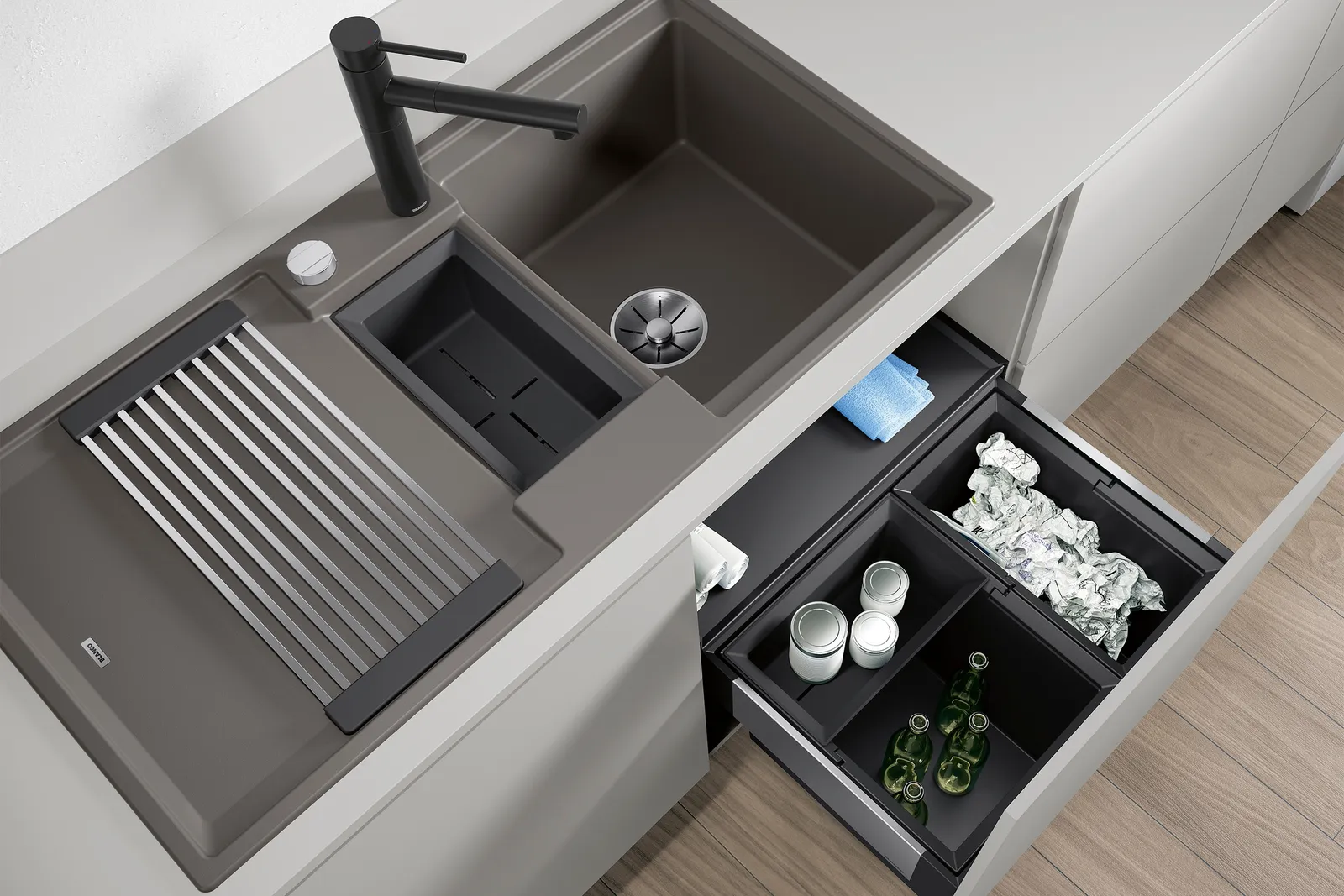
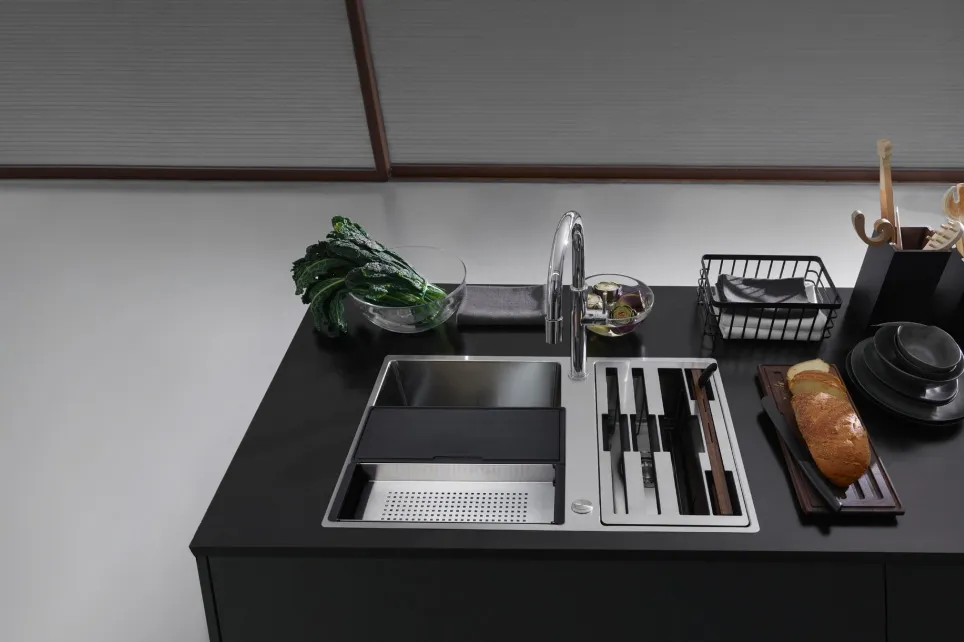
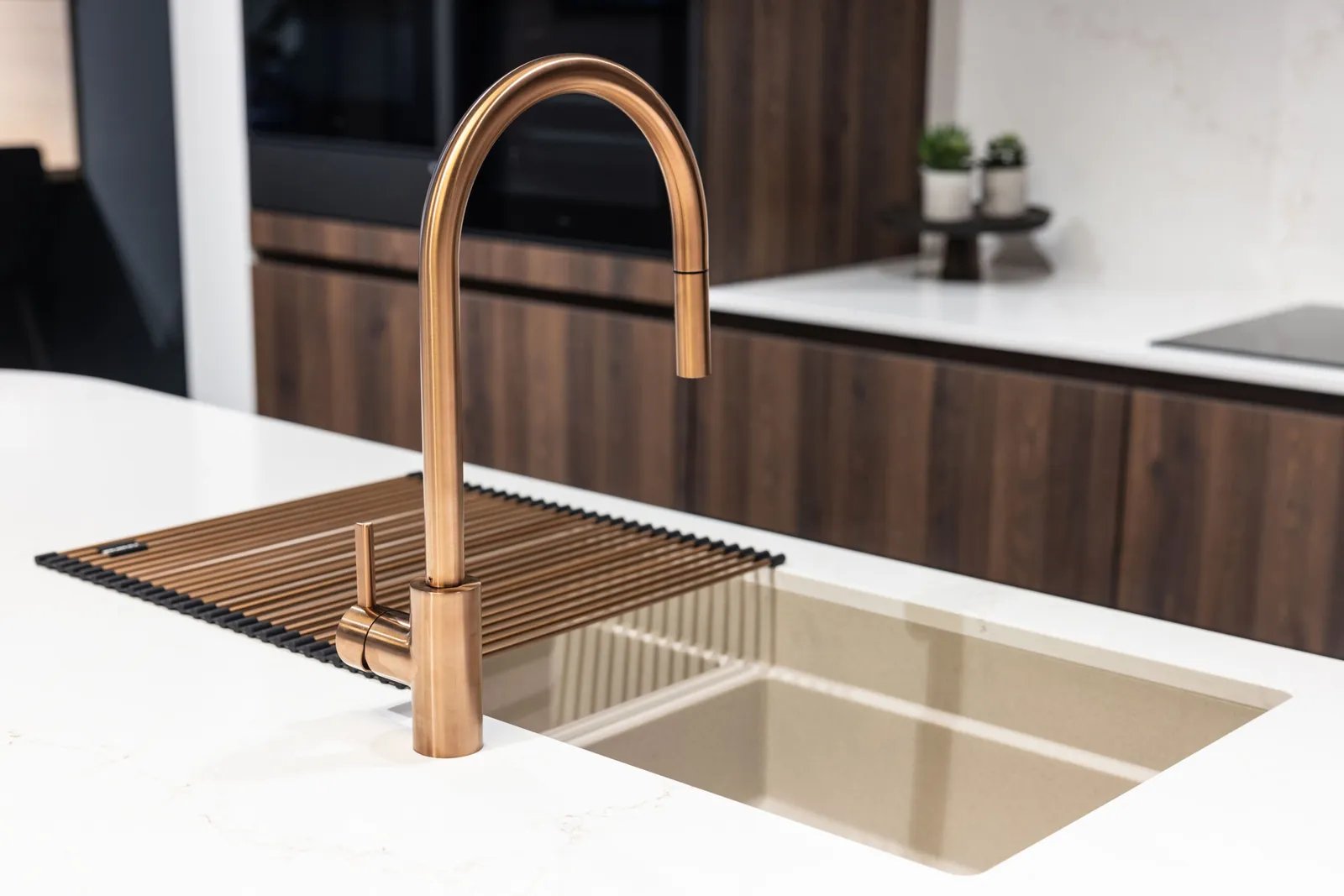
Its name may not have changed, but its uses have multiplied. It can be used for every stage of meal preparation, for example. Manufacturers pay close attention to the shape and practicality of the sink, turning it into a multifunctional workspace, even where space is limited. A chopping board sized to fit the bowl exactly creates extra work surface, for preparing ingredients, for example. You can also place dishes on it before putting them in the dishwasher. As the kitchen has become the main hub for socialising, it is essential to keep it clean and tidy, and manufacturers have come up with practical accessories to make this easier. Naturally, the board that sits over the sink is joined by other useful gadgets. What is more, several manufacturers bring the sink, tap and storage modules together as one. The sink thus becomes part of a complete ecosystem with a range of functions: a practical and attractive whole, and even a true centrepiece in the kitchen. This is particularly true in homes where the kitchen and living room blend into one. It is no surprise, then, that this is the first choice for many consumers.
Een zakelijke vraag aan FRANKE? Get in touch
Companies in this story
Keep following this
Get an email when a new story is published. No account needed.
- ThemeThe multifunctional sink area
- SubjectSinks and taps
- CompanyFRANKE