






The versatility advantage
Texte : Tom Rampelbergh Illustrations : Delabie, Franke, Inoxkeuken
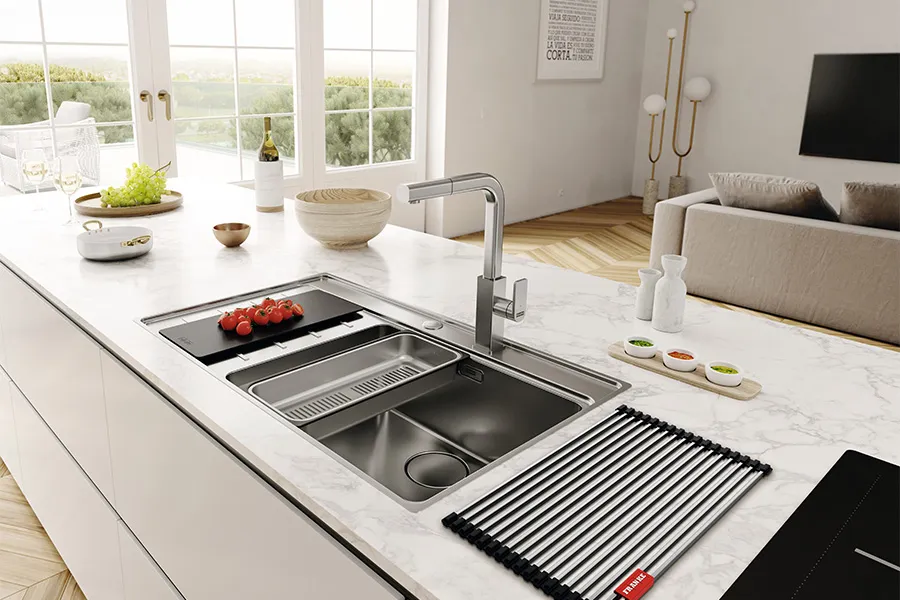
What makes stainless steel so practical and popular that it is now moving from professional applications into private projects? You are unlikely to see an entirely stainless steel home kitchen, but the material is nonetheless gaining ground.
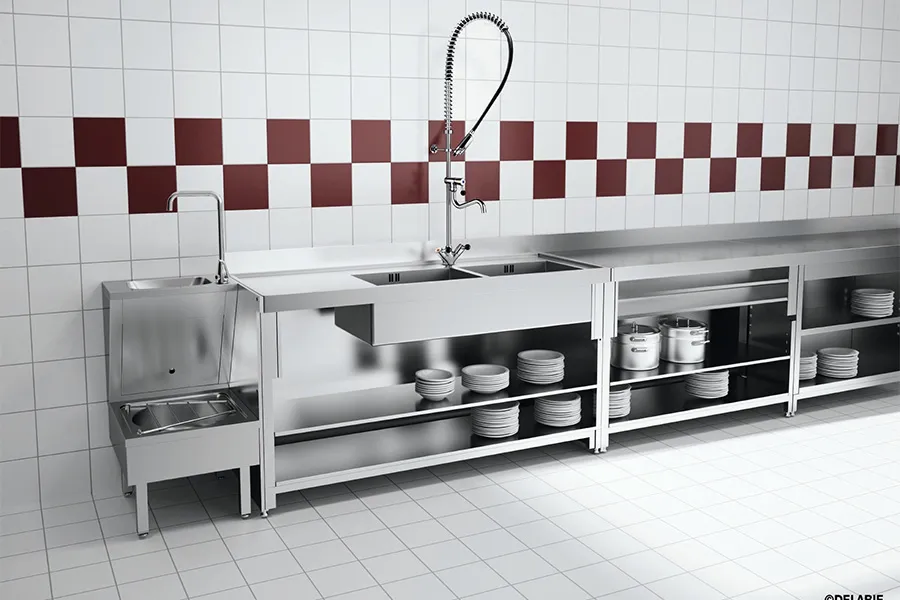
Mention stainless steel, or ‘stainless’ for short, and the first thing that comes to mind is commercial kitchens and food service applications. It is true that, to date, commercial kitchens and other professional applications have been made almost exclusively from stainless steel. The reason is easy to understand. Professional chefs now work with all kinds of ingredients, and food waste is plentiful. A quick search will show that stainless steel has anti-corrosion properties, making it the ideal choice. Of course, its popularity is not simply because it does not rust. This steel has many other characteristics that make it a highly valued choice in professional settings.
Food safety
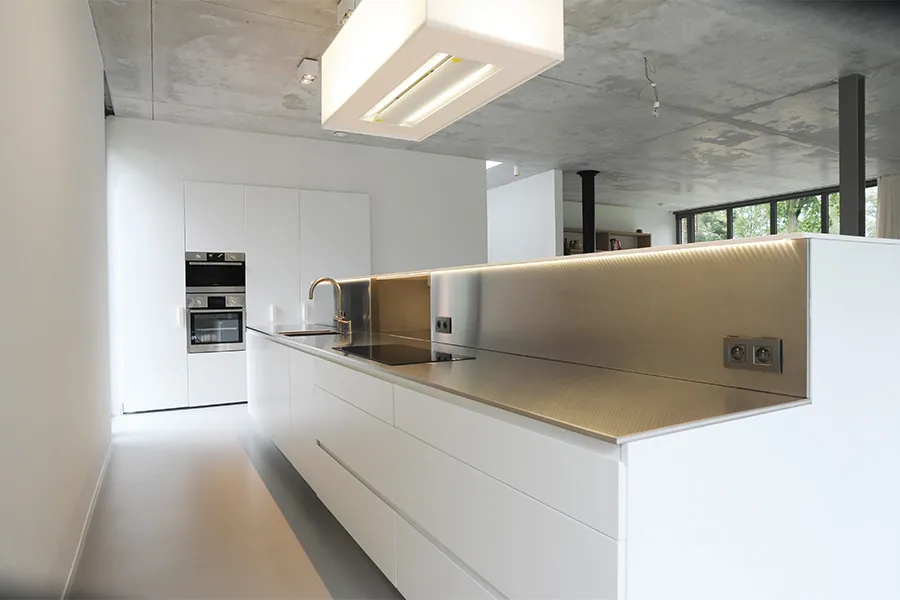
Its many advantages make stainless steel a favourite material for kitchens. It meets the strictest food safety requirements, which is very good news. Although these rules may not apply in your home, or mine for that matter, stainless steel still gives us a sense of security. Fans of modern industrial design almost instinctively turn to stainless steel. That is one reason why its move from professional settings into the home took a little while. There is no accounting for taste, and the industrial look is not for everyone.
Easy to maintain
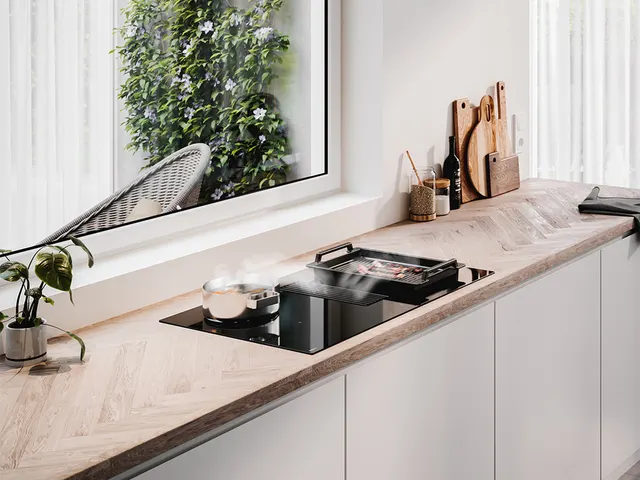
An entirely stainless steel kitchen may be a little too much for most of the potential clients who walk through your door, but that does not mean stainless steel should be ruled out from the outset. This year, the trend seems to be towards combining materials in the kitchen, and stainless steel is back in the spotlight thanks to its many practical properties. A stainless steel worktop is one option, and the food safety benefits mentioned above are a point in its favour. What’s more, daily cleaning after meal preparation is very straightforward: a wipe with a soft sponge is more than enough. A microfibre cloth will remove any fingerprints. As for detergent, use a product specifically designed for stainless steel, and never use chlorine-based cleaners or spirit of salt, which would corrode the steel.
With proper care
Durability. No longer just a buzzword, it is an important consideration, and perhaps even a deal-breaker for some of your potential clients. If used and cared for properly, stainless steel will last a lifetime. What’s more, this recyclable material can be reused indefinitely without any loss of quality. Environmental awareness is very much alive, and sustainability is now firmly embedded in our lifestyles. With stainless steel, you have found the ideal partner.
Question about this story? Ask your question
Keep following this
Get an email when a new story is published. No account needed.
- ThemeKitchen materials and surfaces
- SubjectMaterials