






A light in the night
Lighting is universally recognised as important, and there is no shortage of books on the subject. Some authors discuss the need for good-quality lighting to work safely, others explore the importance of light for our health, while others focus on how to create the desired atmosphere at home. The latter is steadily rising up the list of priorities. And rightly so, since our home is our preferred refuge in a world that can sometimes seem dark and disappointing.
A five-year-old girl asks her father: “Dad, why is there light and darkness?” The answer is quick and simple: “There’s light because we can’t see in the dark. Without light, I wouldn’t be able to see you. When it’s dark outside, all we have to do is switch on the light indoors so we can carry on seeing.” In just three sentences, the father has explained to his daughter the most important aspect of light, as well as the purpose of lighting. Children learn very early on that light is useful and that it can be switched on with a switch. In the kitchen too, the primary function of lighting is to let us see what we are doing, so that we can work safely.
Adequate lighting
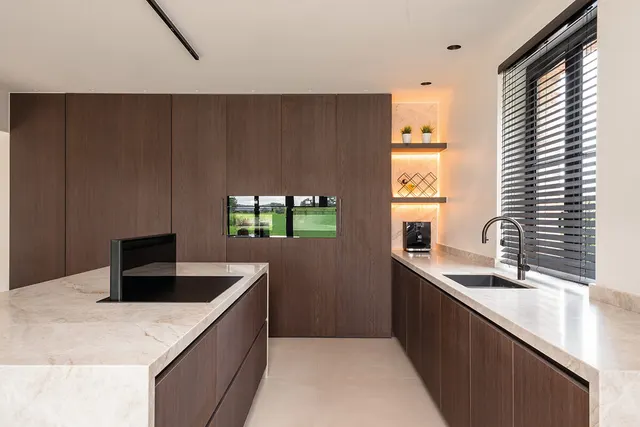
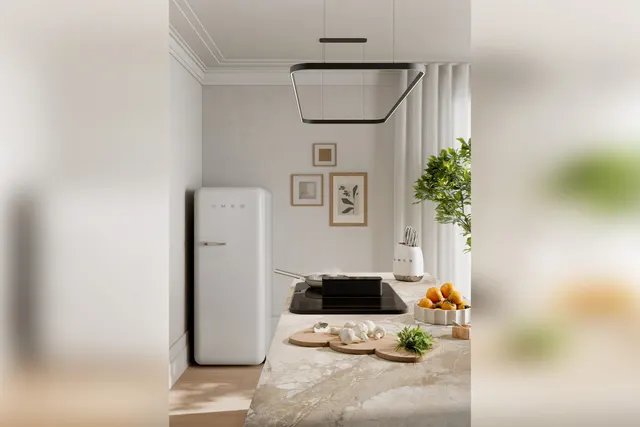
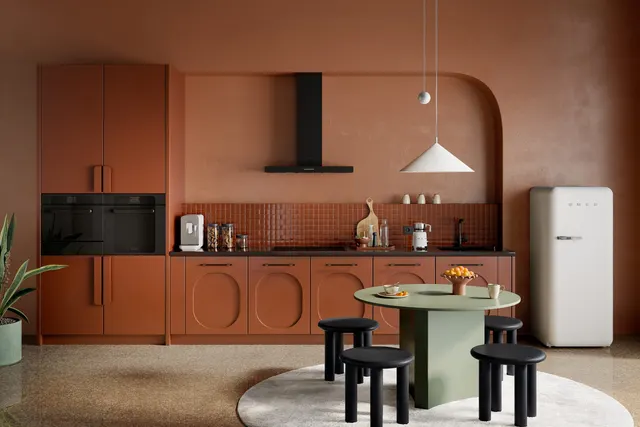
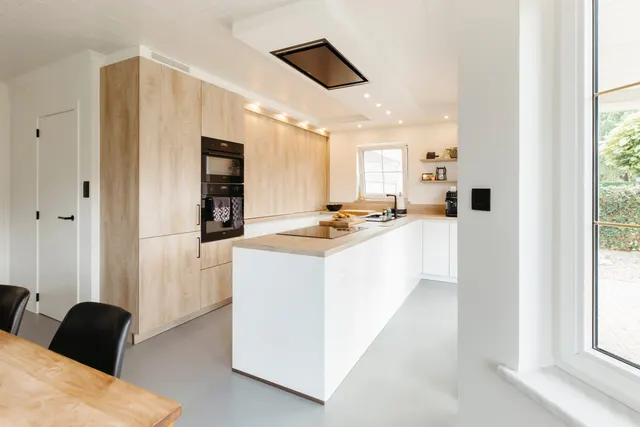
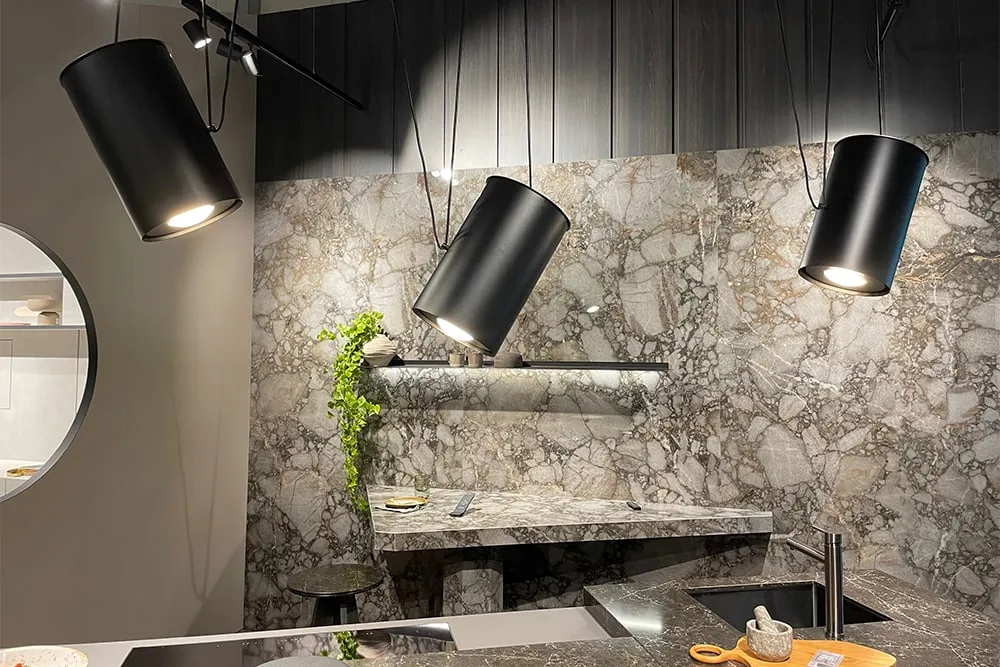
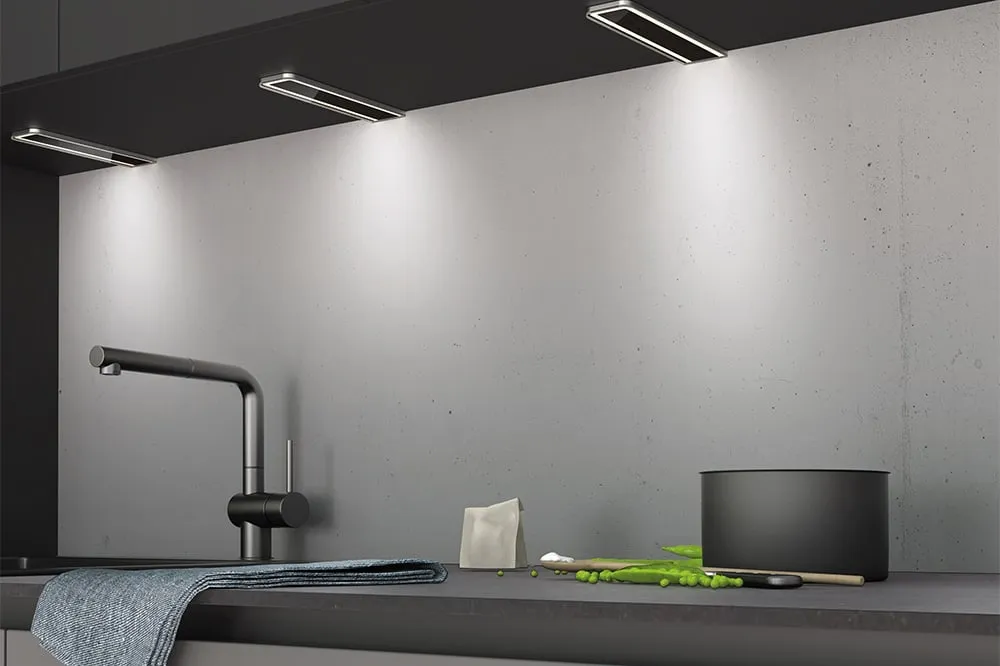
Anyone who regularly works in the kitchen knows only too well that our own body often casts a shadow over the task at hand. At least, that is what happens in a conventional kitchen (by which we mean a kitchen without an island) where the worktop is not next to a window. Not ideal. Fortunately, installing lighting beneath the wall units is all it takes to solve the problem. Today, there is a wide range of solutions, offered by lighting manufacturers and other industry players alike. Although these lighting solutions are designed primarily to go unnoticed, manufacturers make sure they keep up with trends in colour and form. And since we are talking about trends, the living room and kitchen now form one large living space, whose aesthetic and visual consistency we want to maintain. So we coordinate the furniture, flooring, wall colours (although an accent wall in a bold colour is always an option) and, of course, the light fittings above the living-room coffee table and the table where we eat and work. Keen to explore every aesthetic detail and make a feature of the cooker hood? Several cooker hood manufacturers offer models without an extraction module. The hood then becomes a light fitting in its own right.
Playing with light
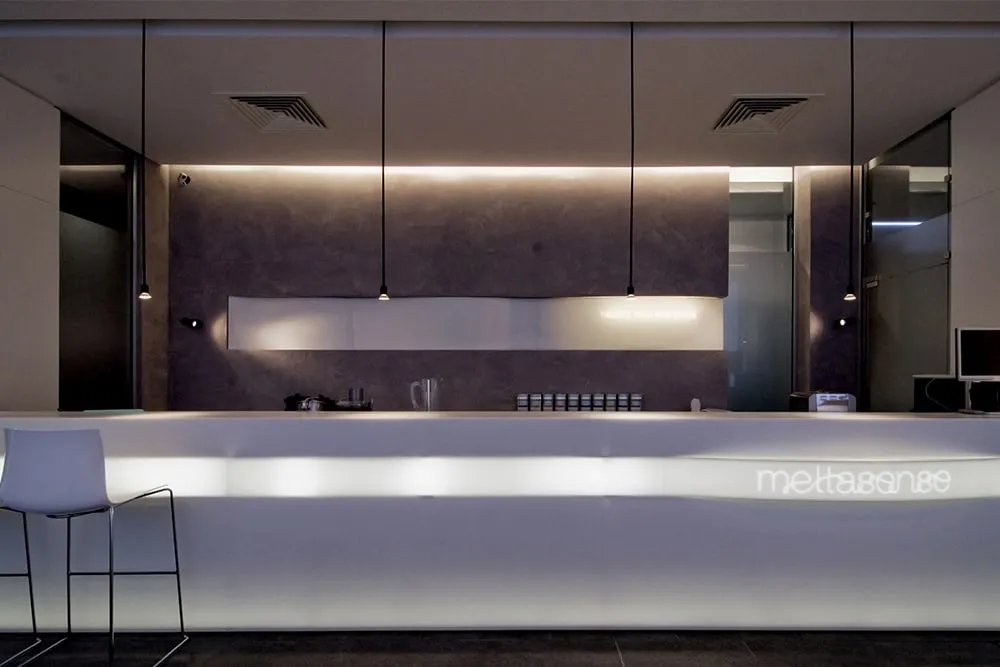
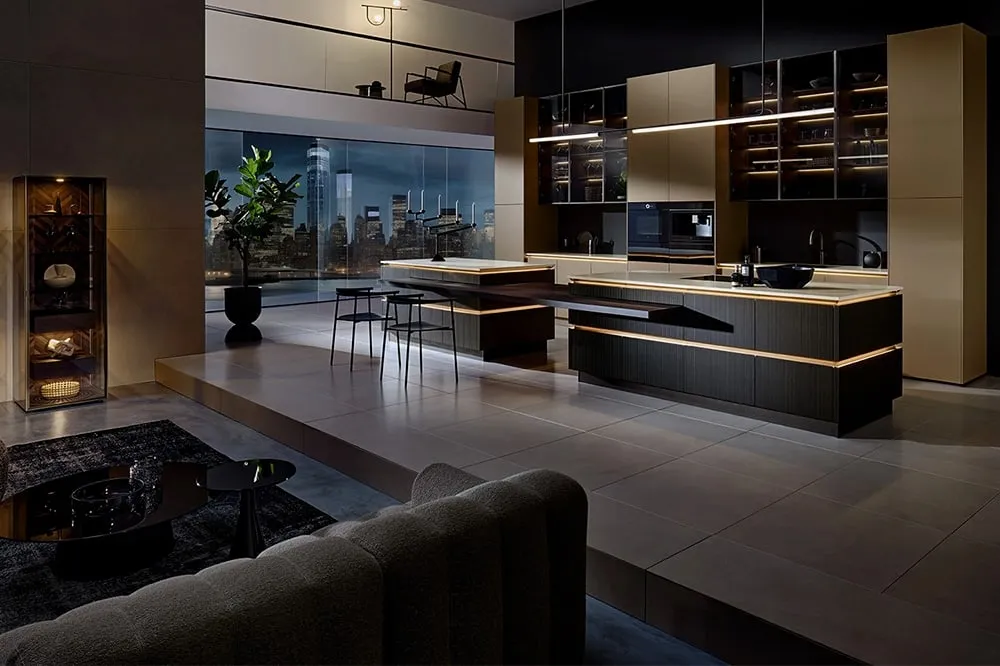
Let’s be honest: the kitchen is and remains the heart of every home. It is where we live, work and entertain guests. It is the room we are proudest of. So how do you incorporate a wine cabinet, which is not always the most elegant of appliances? A wine cabinet, you ask? As lighting? Not as a light source in its own right, of course, but as an element that contributes to the atmosphere. A wine cabinet comes with refined LED lighting that showcases its contents, namely your fine collection of bottles, promising many a sumptuous tasting. In a slightly dark kitchen, this feature and its lighting create an attractive display straight away. And what about a kitchen island that makes light its defining feature? Again, not as a light source in the strictest sense, naturally. But rest assured, an island made from a light-transmitting material will draw every eye in your kitchen.
Question about this story? Ask your question
Keep following this
Get an email when a new story is published. No account needed.
- ThemePlanning a bespoke kitchen
- SubjectElectrical appliances